-

Technology Sciences

Using advanced and emerging technologies to accelerate scientific discoveries by combining structural, chemical, and molecular biology with medicinal chemistry and high-throughput screening.

Who we are

Deputy Director
Genomics Laboratory Head
Laboratory Head
Laboratory Head
Head, Protein Production Facility
Head, Bioinformatics Support Facility
Laboratory Head
Head, Flow Cytometry Facility
Head, Proteomics Laboratory
Laboratory Head
Head, Screening Lab & Joint Head, NDDC (Screening)
Laboratory Head
Joint Head, NDDC (Operations and Medicinal Chemistry)
Head, Research Computing Platform
Laboratory Head
Laboratory Head
Laboratory Head
Head, Advanced Histotechnology Facility
Centre Head

What we do

We’re made up of computational scientists, biologists, and chemists who help develop cutting-edge statistical, computational, and AI strategies alongside structural, chemical and molecular biology approaches. We analyse and interpret biomedical ‘omics’ and imaging data generated across research to decode the genetic and molecular processes that govern human cell development.

In collaboration with biomedical researchers across the institute, we aim to uncover how diseases arise, evolve, and spread, while discovering novel therapeutic targets to improve the care and patient outcomes.

Areas of focus

  • Developing algorithms, software and data frameworks to interpret complex omics datasets (genomics, transcriptomics, proteomics).
  • Developing precise biological tools and agents to target disease pathways.
  • Investigating kinase signalling to understand how cellular communications break down in disease.
  • Mapping molecular architectures to design and optimise targeted, small-molecule therapeutics.
  • Modeling how diseases adapt, mutate, and develop resistance to therapies.
  • Unraveling fundamental cell death mechanisms (like apoptosis) to target cancer and neurodegenerative disorders.

Division highlights

Translating complex datasets into medical discoveries

Dr Belinda Phipson discusses her work providing the foundations needed to turn large-scale datasets into reliable biological discoveries.


Breaking through the blood-brain barrier

Professor Guillaume Lessene discusses leading the development of a new class of cancer drugs that can cross the blood-brain barrier and transform brain cancer treatment.


Autoimmunity: A 3D molecular visualisation

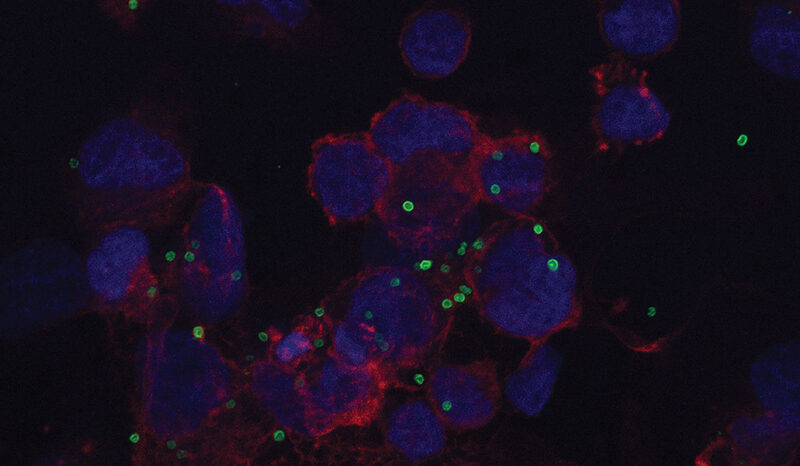
The rogue molecule that triggers auto immunity. Mitochondria are coloured red and DNA is marked in green.


Secret Link