



-

Researchers identify early molecular warning signs of inflammatory bowel disease

28 August 2026

Researchers have uncovered early molecular warning signs of inflammatory bowel disease, revealing the condition can begin before symptoms appear and continue silently even when patients appear well.

The WEHI-led study found a hidden flaw that can damage intestinal cells and is present even in patients whose disease is well controlled.

Published in Science, the findings which were produced in partnership with the Royal Melbourne Hospital, could help explain why many patients experience flare-ups, even when their condition appears stable.

At a glance
WEHI researchers have identified a ‘smouldering’ molecular defect in gut cells from people with inflammatory bowel disease.
The defect involves abnormal cell death and was detectable even in patients whose disease was well controlled.
The findings, discovered in a broad collaboration with the Royal Melbourne Hospital, could open new pathways for earlier prediction of flare-ups, more precise monitoring and more tailored treatment.

A hidden defect in the gut

Inflammatory bowel disease (IBD), which includes conditions such as Crohn’s disease and ulcerative colitis, is a chronic condition affecting around 180,000 Australians.

Symptoms can be severe and include rectal bleeding, abdominal pain, diarrhoea, fatigue and weight loss.

While modern treatments can help many people reach remission, IBD remains difficult to diagnose and treat.

Patients often cycle between periods where symptoms are controlled and sudden flare-ups, which can require hospital care.

Study co-author Dr Andre Samson said the team found that even when patients seemed well and their disease appeared under control, their intestinal cells were primed for damage.

“Once you’ve got the diagnosis, IBD doesn’t go away. Even if you become symptom-free on the current treatments, we know there’s a likelihood you’re going to have a flare or relapse,” said Dr Samson.

“What we found in patient samples was that intestinal cells are primed to die. Even in patients with essentially no symptoms, there’s still this persistent problem sitting there.”
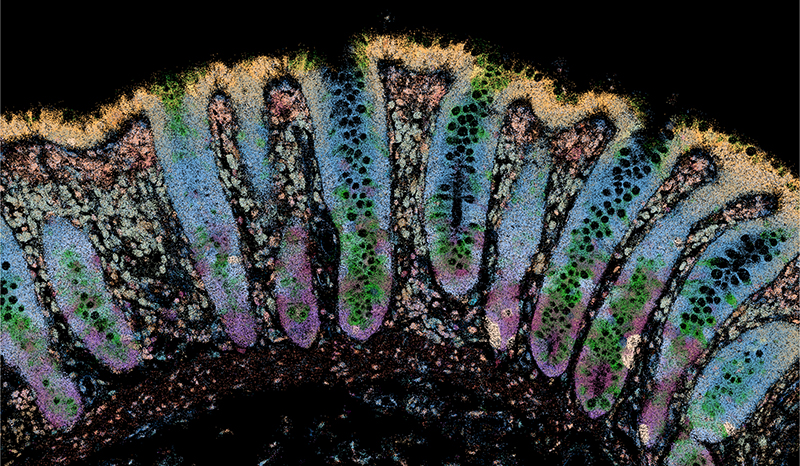

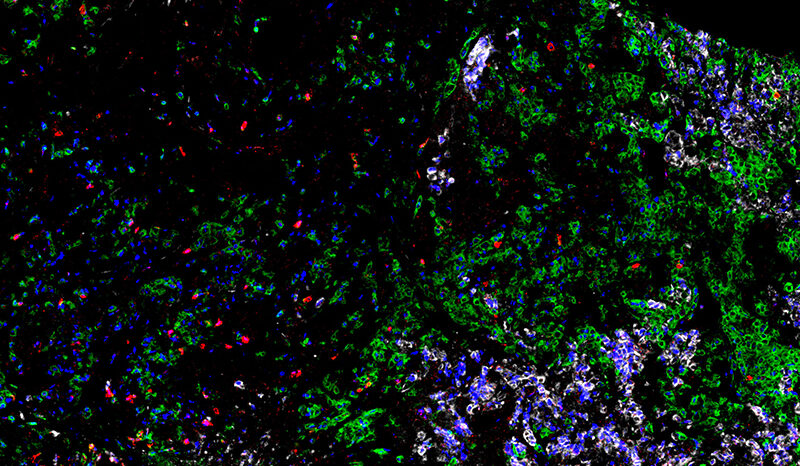
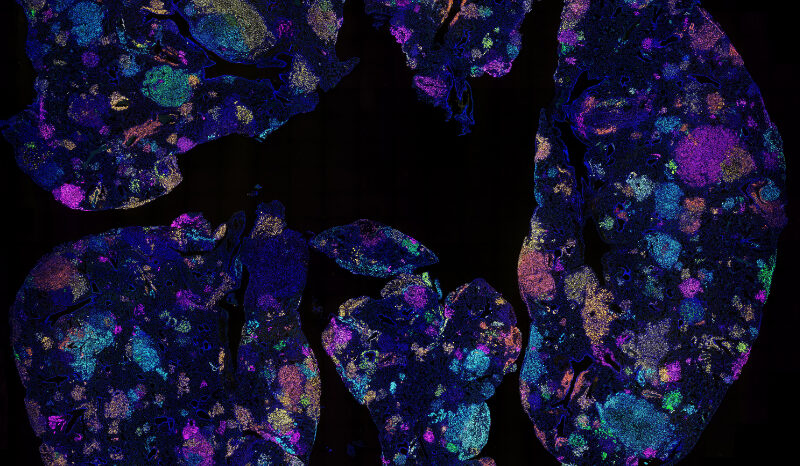
Image taken through spatial transcriptomics showing patterns of cell death-related genes in gut tissue
Image taken through spatial transcriptomics showing patterns of cell death-related genes in gut tissue from people with inflammatory bowel disease.

The findings challenge the idea that cell death in IBD is simply a consequence of inflammation, suggesting it may instead be part of the process driving disease. The defect appeared in the earliest stages of disease activity, including in patients with clinically mild disease and required detailed molecular analysis to detect.

Study co-author Professor James Murphy said the work revealed a ‘smouldering’ defect at the molecular level, shifting their attention to the earliest stages of IBD.

“Most people have been focusing on the major clinical problem, when someone comes to hospital with severe gut inflammation,” Prof Murphy, a WEHI deputy director and lab head, said.

“We’ve gone to the other end of the spectrum and looked at gut tissue that doesn’t have clear signs of active disease. What we’re finding is this molecular defect happening very early in disease progression – one of the first dominoes to fall.”

Patient samples help predict future flares

The work was based entirely on human tissue and patient-derived organoids.

The research team, which included clinicians from the Royal Melbourne Hospital, collected around 900 biopsies from 80 individuals with and without IBD. These were then used to create organoids, lab-grown tissues from patient samples, to enable detailed study of IBD in human cells.

Study co-author Professor Edwin Hawkins, head of the Colonial Foundation Diagnostics Centre where samples were analysed, said this large patient cohort was a major strength.

“While cell death has been implicated in IBD for a long time, how it arises in humans has remained unclear, probably because most studies rely on mouse models which often do not accurately mimic the human condition” Prof Hawkins, a WEHI lab head, said.

“Our study is based on human tissue and patient biopsies.”

The team followed these patients for more than two years and found that people with higher levels of intestinal cell death signalling were also more likely to relapse.

Towards earlier detection, tailored treatment

IBD varies widely between patients, making it difficult to predict who will respond to various treatments or relapse.

Study co-author Dr Jiyi Pang said the findings could help researchers develop more precise ways to monitor disease and, in the future, better match treatments to patients.

“The causes of IBD are largely unknown and quite variable,” Dr Pang said.

“Using mini-intestinal organoids grown in a dish and by working alongside a diverse team of researchers and clinicians, we uncovered the inflammatory signals responsible for this cell death response.”

“We now have the hallmarks of what underlies disease at the molecular level. The question is which of those are therapeutically actionable and whether they might help us to better match treatments to patients, based on how their disease behaves at a molecular level.”

Study co-author Dr Aysha Al-Ani said while the findings may not immediately translate into a new diagnostic test or treatment, they provide a strong foundation for future work, including therapeutics.

“It opens new avenues for different prognostic tools, using more sophisticated and refined methods than are currently used clinically,” Dr Al-Ani said.

“The ethos behind IBD therapy is to reduce the frequency and severity of flares, halting disease progression and improving patients’ lives. More sensitive molecular detection may help us keep patients in deep remission for longer and introduce new treatments.”

Photo of Dr Aysha Al-Ani standing outside a modern building
Study co-author and gastroenterologist Dr Aysha Al-Ani.

The research team included scientists and clinicians from the University of Melbourne, the Royal Melbourne Hospital, Royal Children’s Hospital, Monash Institute of Pharmaceutical Sciences, the Hudson Institute of Medical Research and Monash University.

This work is supported by the Kenneth Rainin Foundation, National Health and Medical Research Council of Australia (NHMRC), the Australian Research Council, Stafford Fox Medical Research Foundation and the Victorian State Government.

The study, “A necroptotic-to-apoptotic signaling axis underlies inflammatory bowel disease”, is published in Science: https://doi.org/10.1126/science.aeh7112

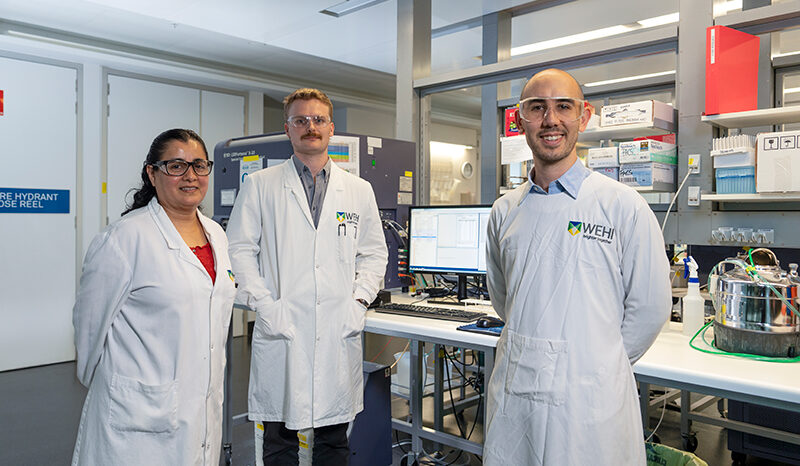
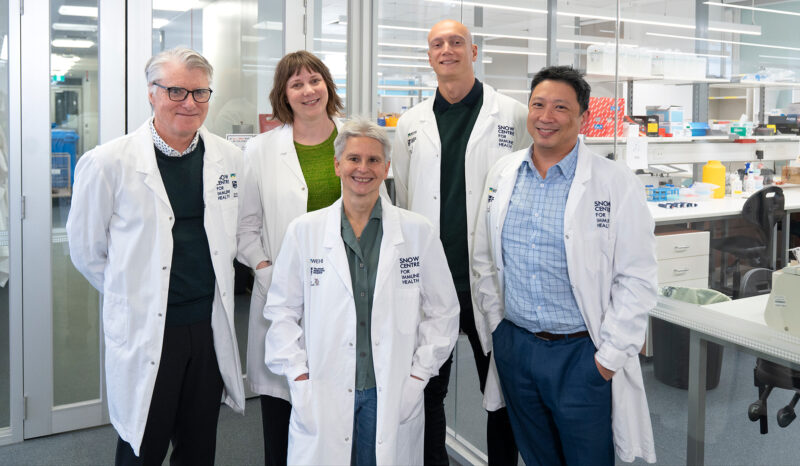
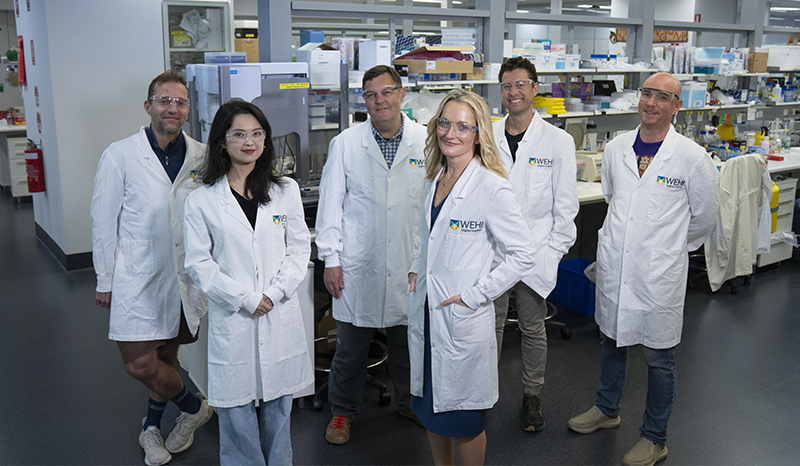
Header image: The team that led the research, L–R: Professor James Vince, Dr Jiyi Pang, Professor James Murphy, Associate Professor Britt Christensen, Dr Andre Samson, Professor Edwin Hawkins.

Your donation could help find that cure that saves someone – maybe someone you love.
Donate now
Related topics
Key Researchers
Laboratory Head
Deputy Director
Jiyi Pang
Research Officer
Dr Andre Samson
Scientific Team Leader
Laboratory Head
Media Enquiries
Reference
A necroptotic-to-apoptotic signaling axis underlies inflammatory bowel disease
Journal
Science
DOI
doi.org/10.1126/science.aeh7112
Full details
WEHI Authors
Laboratory Head
Deputy Director
Jiyi Pang
Research Officer
Dr Andre Samson
Scientific Team Leader
Laboratory Head
Jiyi Pang
Research Officer
Aysha Al-Ani
Aysha Al-Ani
Komal Patel
Komal Patel
Emily Yunzhuo Zhou
Research Officer
Samuel Young
Samuel Young
Research Officer
Dr Marilou Barrios
Senior Research Officer
James Rickard
James Rickard
Siqi Chen
PhD Student
Xiuquan Ma
Xiuquan Ma
Research Officer
Senior Research Officer
PhD Student
Annette Jacobsen
Annette Jacobsen
Asha Jois
PhD Student
Ashley Weir
Ashley Weir
Senior Research Officer
Christopher Horne
Christopher Horne
Dr Ruqian Lyu
Research Officer
Lucy Mather
Research Assistant
Senior Research Officer
Head, Advanced Histotechnology Facility
Imadh Abdul Azeez
Research Officer
Dr Tao Tan
Research Officer
Laboratory Head
Dr Tim Spelman
Clinical Biostatistics Officer
Dr Michael Christie
Deputy Head, CFDC
Laboratory Head
Laboratory Head
Genomics Laboratory Head
Laboratory Head
Kate Lawlor
Kate Lawlor
Laboratory Head
Britt Christensen
Britt Christensen
Dr Andre Samson
Scientific Team Leader
Laboratory Head
Deputy Director
Support us

Together we can create a brighter future

Your support will help WEHI’s researchers make discoveries and find treatments to ensure healthier, longer lives for you and your loved ones.

Sign up to our quarterly newsletter Illuminate

Find out about recent discoveries, community supporters and more.

Illuminate Winter 2026
View the current issue