-

Our approach to Parkinson’s disease

The profound symptoms of Parkinson’s are caused by accumulation of alpha-synuclein and the death of dopaminergic neurons. These are caused by defects in mitochondrial functioning, ubiquitin signalling and cell death mechanisms.

The Parkinson’s Disease Research Centre has brought together, in the same institute, world-leading experts in these areas to lead collaborative research and find a way to stop Parkinson’s.

WEHI has a decades-long history of leading research into why cells fail to die and instead form cancers, along with developing drugs to help. Now we’re flipping the science and using our expertise to stop neurons from dying in Parkinson’s disease.

Precision medicine for Parkinson’s disease

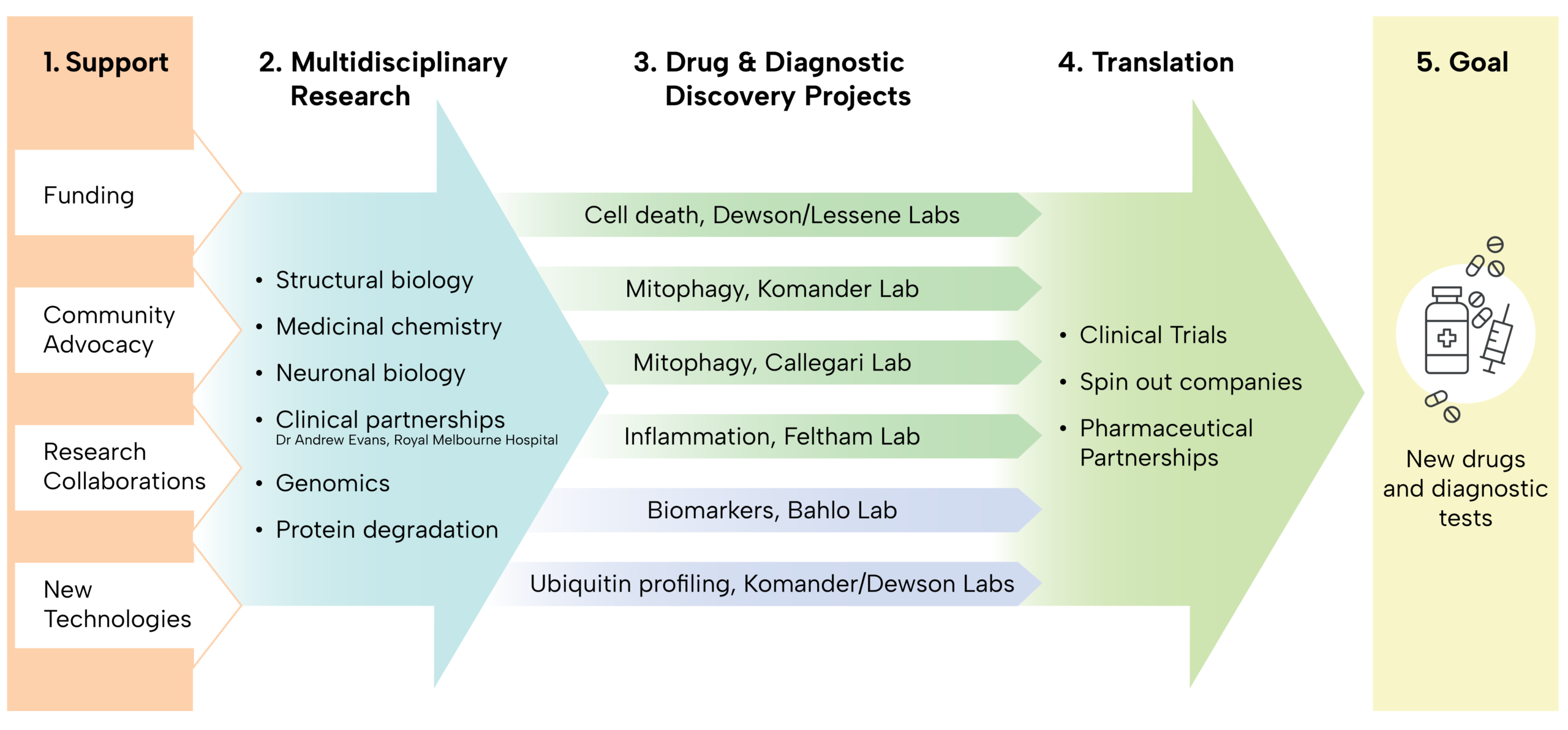
Our research is built around five interdependent themes to accelerate the discovery of precision medicine to stop disease progression:

  • Biomarker discovery
  • Breakthrough discoveries
  • Drug discovery
  • Clinical trials
  • Advocacy

This approach, coupled with WEHI’s world-class platforms for drug development, medicinal chemistry, protein degradation technologies, bioinformatics and genomics, as well as our established links to the clinic, provides our scientists a unique position to make fundamental breakthrough discoveries and develop multiple drug discovery projects for disease-modifying drugs to take to clinical trial.

PDRC pillar image

Current research projects

A core aspect of our research is to understand neuronal cell death and how to prevent it. We are targeting specific mechanisms and pathways based on genes with known links to Parkinson’s.

Our labs are also at the forefront of understanding mitochondrial quality control in neurodegeneration and are looking at potentials for drug repurposing to establish if medications already approved for use in the clinic are effective against neurodegeneration.

To complement these projects our researchers in bioinformatics are working towards blood biomarkers as a diagnostic screening test.

The Callegari Lab

We are delighted to welcome Dr Sylvie Callegari’s lab to the Parkinson’s Disease Research Centre team. Building on her recent breakthroughs in PINK1, a gene that has long been associated with Parkinson’s disease and is important for signalling mitochondrial damage, Dr Callegari’s lab will focus on understanding how to keep mitochondria healthy in Parkinson’s disease and translating her discoveries into a disease-modifying precision medicine.

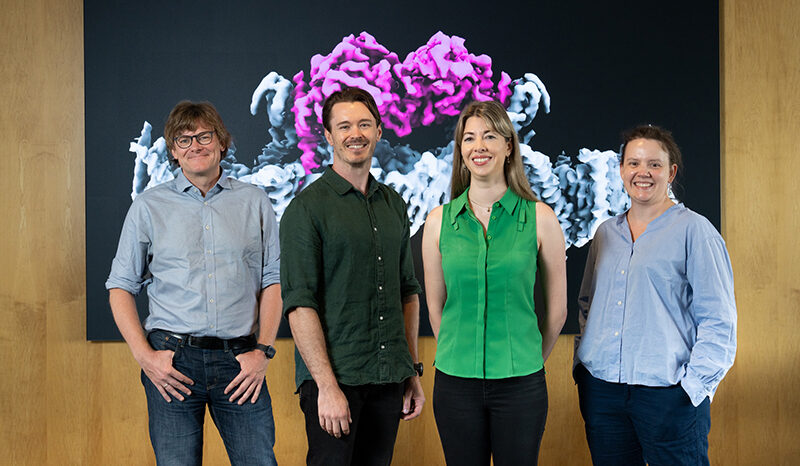
Parkinson’s disease research lab heads

Professor Grant Dewson
Head, Parkinson’s Disease Research Centre
Professor David Komander FRS FAA
Head, Ubiquitin Signalling Division
Professor Guillaume Lessene
Chemical biology Head, Drug Discovery Division
Dr Sylvie Callegari
Mitochondrial function Lab Head
Dr Bekky Feltham
Proteomics Lab Head
Dr Andrew Evans
Neurology Clinician Researcher
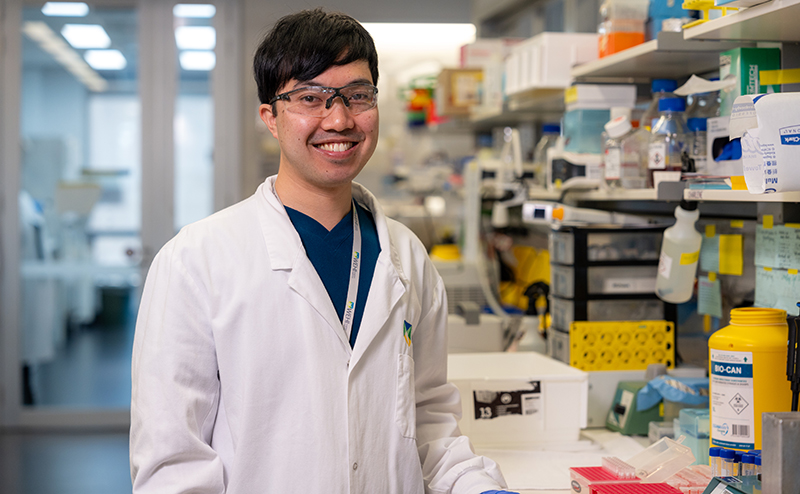
Parkinson’s Disease Research Centre PhD student Dr Alex Yeung

Our contributions to Parkinson’s research

We publish our research in highly regarded peer reviewed journals, a selection of which can be accessed in the links below.

Keep updated on our research and support our work by subscribing to our newsletter.

The future of Parkinson’s research

The intersection of collaborative research and emerging technology is where the next generation of Parkinson’s drugs will be found.

From culturing neurons in the lab that have Parkinson’s genetics using stem cells, to using artificial intelligence to accelerate research and access to genetic databases for Parkinson’s, advances in the tools we have at our disposal are beginning to unravel the complexity of Parkinson’s disease.

Central to our discoveries so far has been global research collaborations and access to funding from both grants and philanthropic donations.

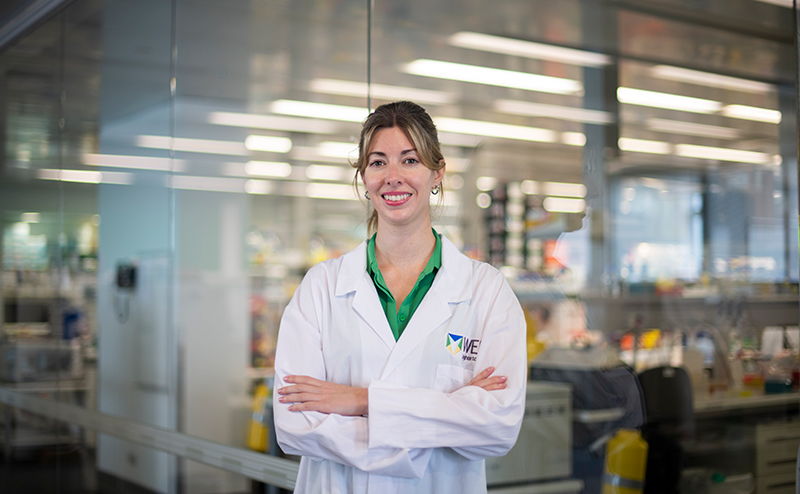
The Parkinson’s Disease Research Centre’s Dr Sylvie Callegari

Healthcare collaborations

We have neurologists from the Royal Melbourne Hospital’s Movement Disorders Clinic embedded as clinician researchers to bring the insights and firsthand experience of a healthcare perspective to the problem of finding a cure for Parkinson’s.

This ensures that as well as delivering fundamental scientific discoveries, we also have an approach to translating those discoveries into potential drug therapies through clinical trials.

Join our mailing list

Get the latest news from the Parkinson’s Disease Research Centre straight to your inbox.

More news from the Parkinson’s Disease Research Centre