-

Manipulation of the host cell by the diarrheal parasite Cryptosporidium

Project type

  • PhD

Project details

The human intestine is an extraordinary immunological balancing act. It must tolerate harmless food antigens and the microbiota while remaining poised to detect and eliminate invading pathogens. How pathogens exploit this delicate equilibrium is one of the most fascinating questions in modern biology.

Our lab investigates this using Cryptosporidium, a leading cause of diarrhoeal disease and childhood malnutrition worldwide. We study how this intracellular parasite exports proteins into infected intestinal epithelial cells to manipulate host biology and suppress immune responses. Having discovered several previously unknown parasite effectors, we are now uncovering how they function at the molecular level. This project offers the opportunity to reveal fundamental mechanisms of host–pathogen interactions with genuine translational potential.


About our research group

The human intestine is an extraordinary immunological balancing act. It must tolerate harmless food antigens and the microbiota while remaining poised to detect and eliminate invading pathogens. How pathogens exploit this delicate equilibrium is one of the most fascinating questions in modern biology. Our lab investigates this using Cryptosporidium, a leading cause of diarrhoeal disease and childhood malnutrition worldwide.

We study how this intracellular parasite exports proteins into infected intestinal epithelial cells to manipulate host biology and suppress immune responses. Having discovered several previously unknown parasite effectors, we are now uncovering how they function at the molecular level. This project offers the opportunity to reveal fundamental mechanisms of host–pathogen interactions with genuine translational potential.

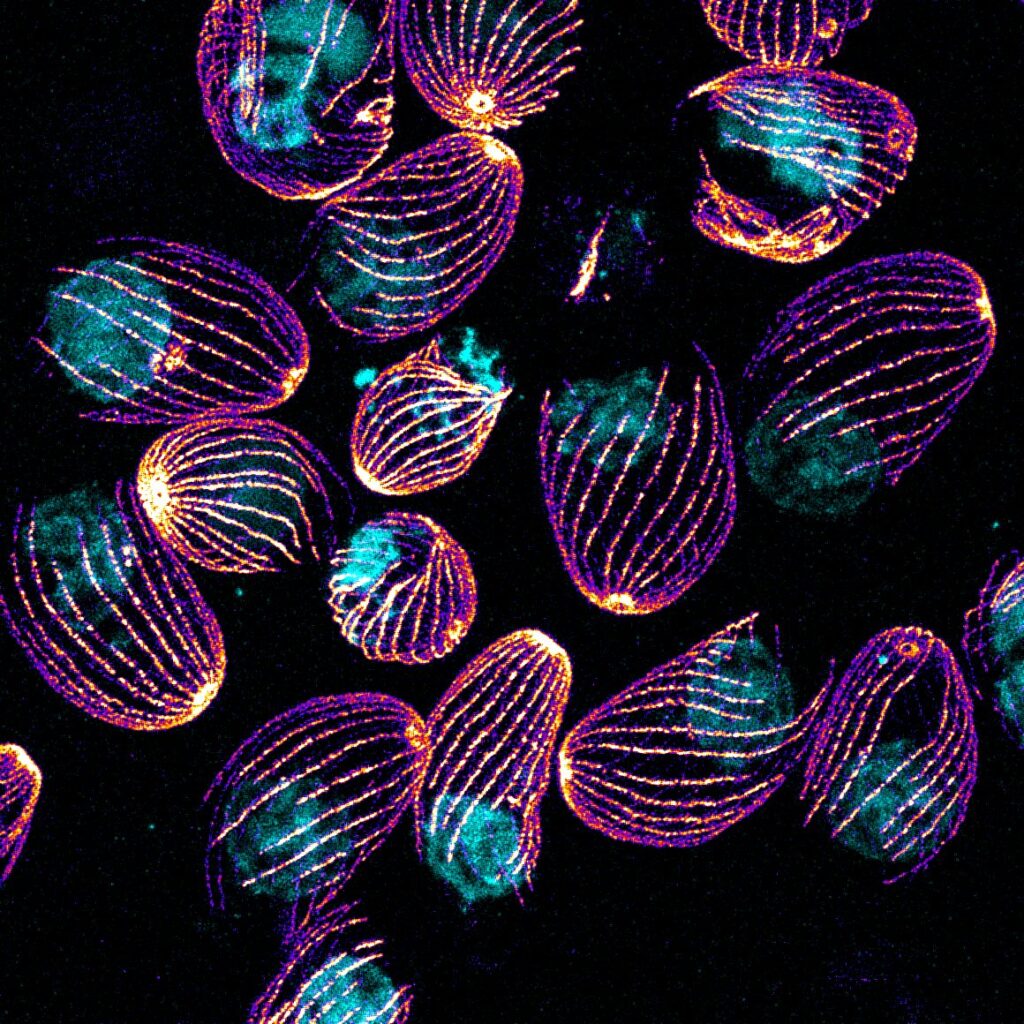
Jellyfish or Toxoplasma? – Art of Science winner – showing the basket-like cytoskeleton of Toxoplasma using expansion microscopy.

Education pathways