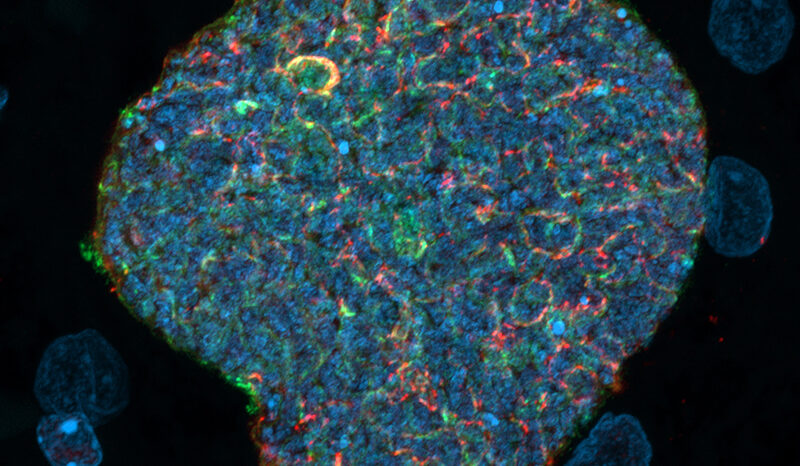


Every living cell has a dynamic cytoskeleton. Researchers used lattice light sheet microscopy to show how cells reorganise and change form – insights that could inform future cancer treatments. Technology: Zeiss Lattice Light Sheet 7.
If you would like to give to a specific research program or support the work of a particular researcher, contact our fundraising team today.
Every living cell has a dynamic cytoskeleton. Researchers used lattice light sheet microscopy to show how cells reorganise and change form – insights that could inform future cancer treatments. Technology: Zeiss Lattice Light Sheet 7.
At the Centre for Dynamic Imaging, researchers can watch living cells in real time, uncovering how they move, divide and interact.
These dynamic processes hold the keys to understanding disease and developing new treatments.
Our advanced imaging platforms include high-resolution 3D imaging, light sheet microscopy for fast, gentle imaging of living systems and emerging spatial technologies that can map cellular interactions at scale.
Imaging is about more than beautiful pictures – it’s a driver of discovery.
The Centre for Dynamic Imaging has enabled landmark research findings at WEHI, including:
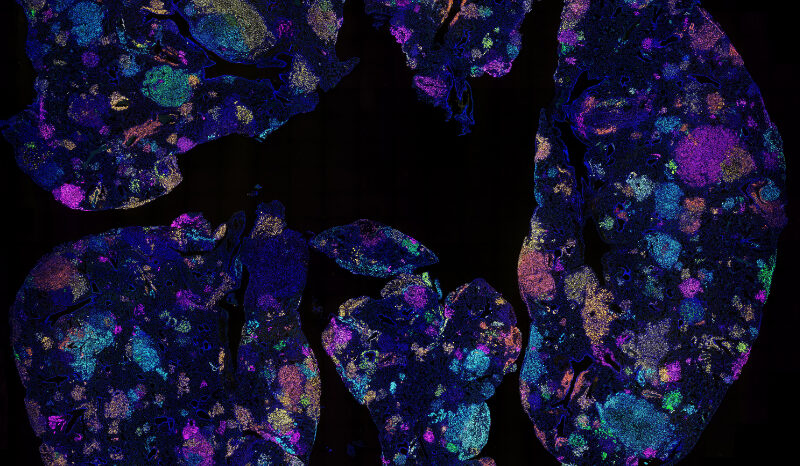
A high‑resolution 3D image taken with a light‑sheet fluorescence microscope shows a mouse lymph node after a successful immune response to a virus. This image is helping inform research into better, longer‑lasting vaccines. Technology: Zeiss Light Sheet Z1.
Joining ZEISS Labs@Location places the centre among an elite network of imaging leaders worldwide.
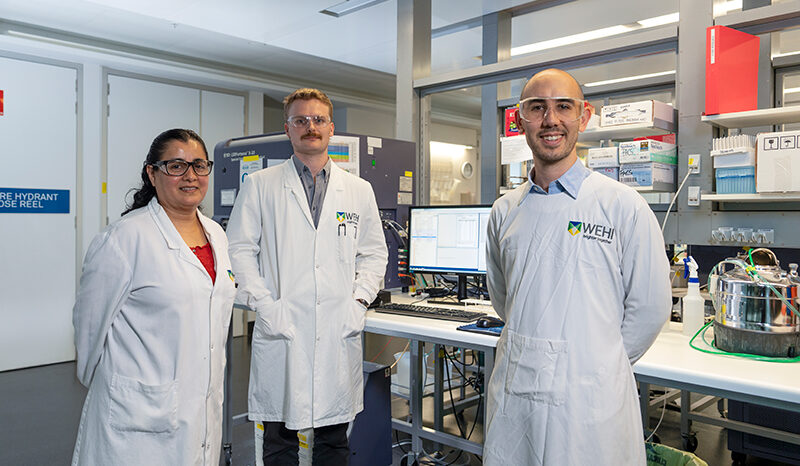
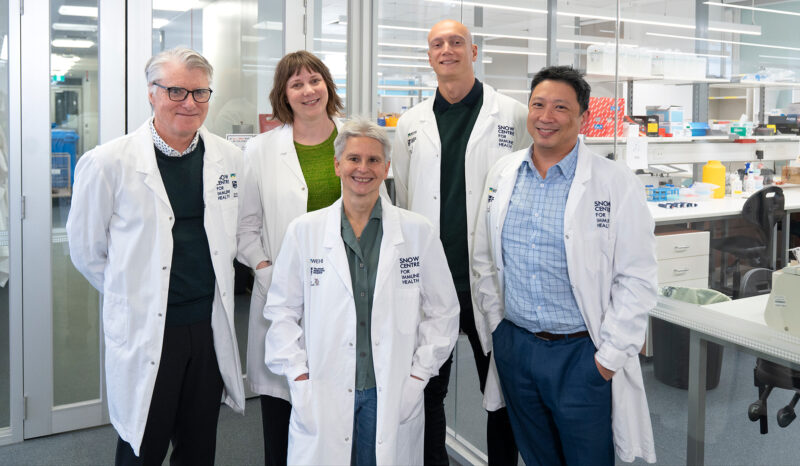
Our partnership with Zeiss has been nurtured over many years and through many critical projects by the centre’s Senior Research Scientist (Technology), Dr Niall Geoghegan, whose leadership and forward-thinking approach has been instrumental.
Now, as the first Labs@Location partner in the Southern Hemisphere, we’re able to bring next-generation ZEISS technologies to Australia and ensure we can access the best tools to tackle the toughest questions in medicine.
It is a fitting recognition of WEHI’s expertise and highlights the world‑class capability our teams have built through years of innovation and dedication.
We partner with WEHI scientists and collaborators nationwide to unlock insights that deepen our understanding of disease. And behind all those scientific advances lies an investment in infrastructure.
High-resolution confocal systems, light sheet microscopes and next‑generation spatial imaging tools are not optional – they are vital tools that accelerate research and lay the groundwork for tomorrow’s medical breakthroughs.
Continued investment in these essential technologies ensures our researchers can keep asking – and answering – the questions that matter most.
A whole mouse brain revealing dopamine-producing nerve cells. This research aims to unlock new therapies for Parkinson’s disease. Technology: Zeiss Light Sheet Z1.
–
Header image: Captured with a confocal laser scanning microscope, this image by Dr Phil Arandjelovic shows uniquely marked mouse liver cells and is advancing research into the origins of liver cancer. Technology: Zeiss 980 LSM