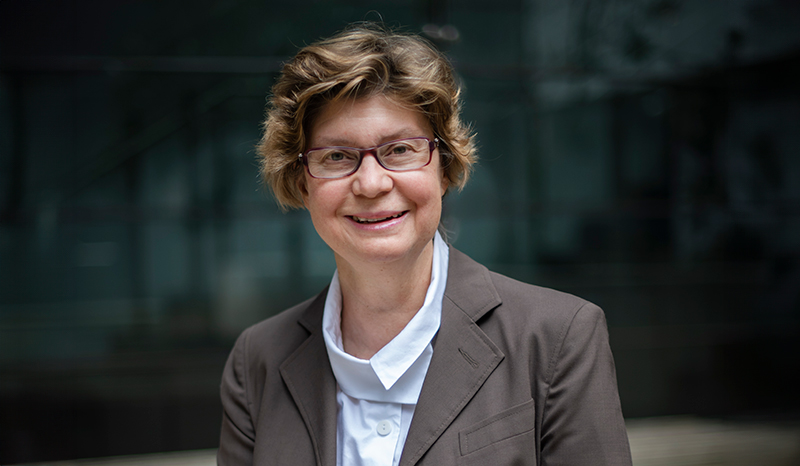

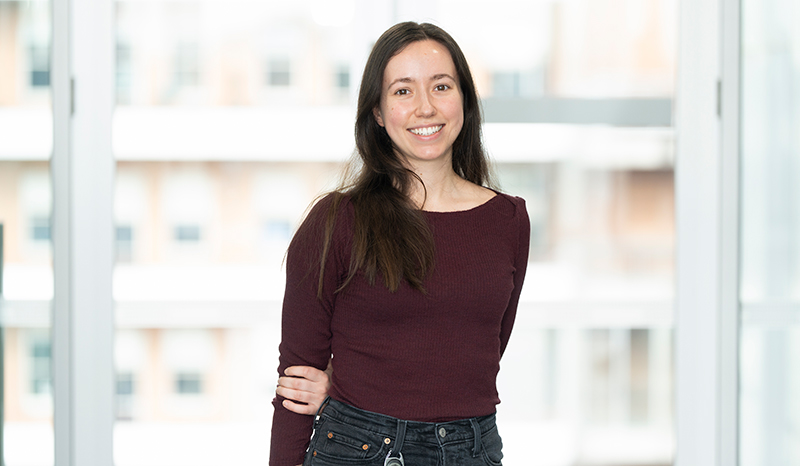
Sara Berent is a PhD student researching lupus nephritis, an autoimmune disease that attacks the kidneys and disproportionately affects women more than men.
She was recently awarded People’s Choice of a hands-on 6-month coaching program called InnoVision that helps budding WEHI entrepreneurs develop the skills and strategies required to turn ideas and early projects into enterprises.
When I meet someone new, I tell them I am… studying reasons why people develop lupus. I recently joined WEHI’s InnoVision, a program that helps develop entrepreneurial skills. I developed a diagnostic and clinical decision‑making tool for lupus that tests urine to reveal immune signatures which could help clinicians choose the right medication, detect early inflammation and track treatment response.
The technology I use most in my work is… sequencing. For the diagnostic test, I focus on O-Link, a proteomics platform that uses DNA-barcoded antibodies to measure proteins of interest. When two antibodies bind next to each other to the same protein, they form a unique barcode. That means we can detect the presence of a protein through its barcode, which we read using DNA sequencing, rather than by directly measuring the protein like in traditional proteomics. In lupus, where the immune system behaves differently from person to person, O-Link helps keep things consistent and track signals of disease activity using easy-to-collect urine samples.
What I love about moving into translational research is… understanding that our science has real-life implications. I studied all things immunology for many years, but it’s a completely different type of problem solving when you apply it to a scenario in a clinic. Suddenly, you must consider new aspects such as patient care, hospital systems and economics. You move from a black and white mindset and the isolation of a lab, to navigating human psychology and behaviour in complex environments.
One of the coolest things I’ve been able to do as a scientist was… be part of someone’s treatment plan even when I was just an intern. Before moving to Australia, I worked in the dermatology department at a hospital in Vienna. There, our team diagnosed a patient who had been living with inflammatory skin lesions for 10 years. We discovered the cause was a bacterial biofilm (a stubborn, protective layer of bacteria) which formed along the nervous system inside the skin, and could give the appropriate treatment.
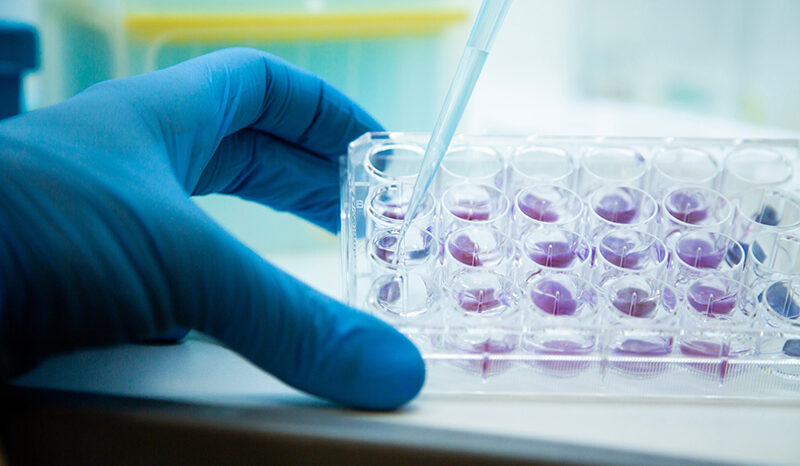
The thing I’m proudest of is… chairing Citizens of Science 2025 (founded in 2022 by WEHI researcher Dr Jack Alexandrovics). It’s a community engagement program run by graduate students to educate the public on science. We run a six-month program with five other institutes in Parkville offering mentorship, events, projects and hands on lab experience. I love seeing the joy of someone pipetting for the first time, it makes all the hard work worth it.
I love being a scientist at WEHI because… I get to work in a great team of diverse experts and departments such as bioinformatics, genomics, proteomics and other collaborators. It’s a fun place to work. Even if our experiments aren’t going well, the mood is good!
One of the biggest challenges I’ve overcome was… when I broke my leg before I started my PhD. I couldn’t find a job in my field as you can’t work in the lab on crutches. I was forced to take a year off. Instead, I worked at a start-up company, which has taught me the skills to help with my diagnostic test and commercialisation.
For me, collaboration means… joy. It’s the zest of research and really where all the flavours are. Only through collaborating can you share and confront ideas and open doors that otherwise would be closed.
The thing that gets me out of bed in the morning is… genuine curiosity. It’s so much easier to get up when I have exciting data to look at. Not all days are great but it’s part of PhD resilience-building, knowing that it’s worth trying every day.
When I’m not in the lab, I like to… be around rocks. I have fallen in love with national parks around Australia. I’m always either in the forest or on the mountain. I especially love hiking in cooler weather when it’s slightly foggy, lightly raining and there is no one else around.