

-

Early clinical results deliver encouraging milestone for malaria drug candidate  

19 March 2026

Findings from two early clinical studies suggest a new dual-action antimalarial drug candidate is well tolerated in humans.

The first-in-class clinical candidate, MK7602, is being developed by WEHI and global biopharmaceutical company MSD (tradename of Merck & Co., Inc., Rahway, N.J., USA).

The Phase 1 trials, led by MSD, found that the compound can achieve blood concentration levels predicted to deliver its intended antimalarial effect – a key milestone that supports progression to later-stage clinical evaluation.

MK-7602 emerged from a medicinal chemistry programme by MSD and WEHI that was built on initial hits identified by the National Drug Discovery Centre (NDDC) at WEHI using its advanced screening technologies.

Dual-strategy compound

The emergence of drug-resistant parasites has complicated efforts to control and eliminate malaria, which remains a leading cause of preventable illness and death globally.

MK-7602 targets the most prevalent malaria parasites in humans, Plasmodium falciparum and Plasmodium vivax, and blocks two essential parasite enzymes, providing a unique dual-action strategy with the potential to reduce the risk of resistance.

The drug candidate is the result of a near-decade research collaboration between WEHI and MSD, led by Professor Alan Cowman AC, Dr David Olsen and their research teams.

Discovery and development efforts received funding support from the Wellcome Trust and MSD.

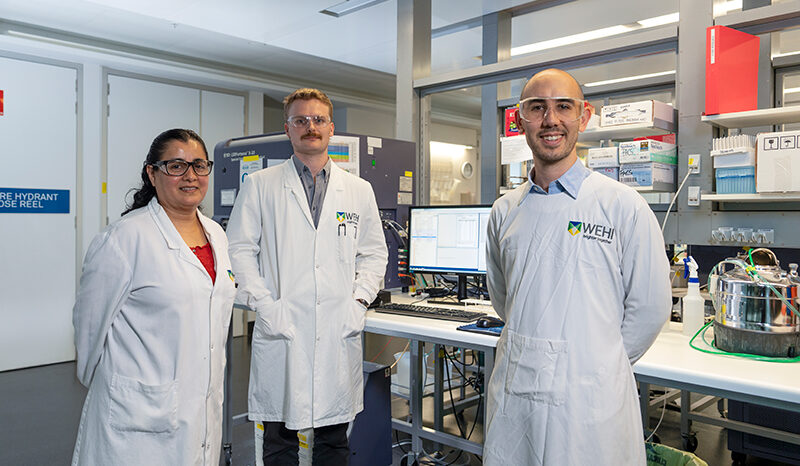
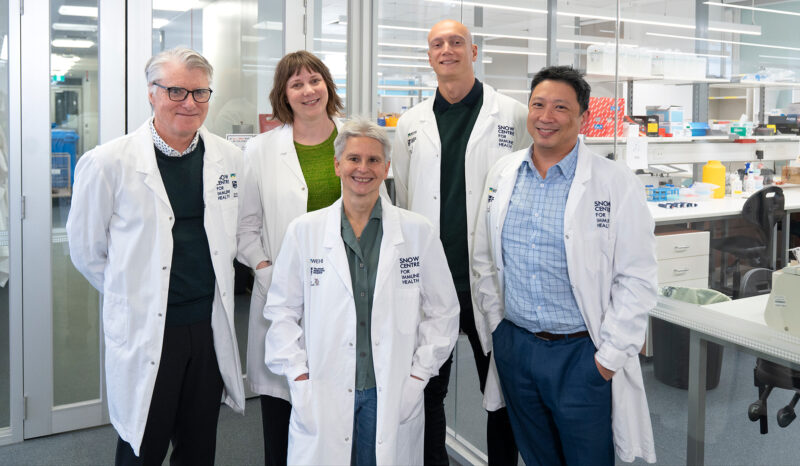
Professor Alan Cowman AC (L) and Dr David Olsen (R).

Critical drug discovery collaboration

The compound was originally identified and optimised using the advanced screening technologies of the National Drug Discovery Centre (NDDC), Australia’s premier small molecule screening facility based at WEHI.

Prof Cowman, a WEHI Laboratory Head, said: “The NDDC screen was the breakthrough moment that transformed our approach and accelerated our research effort. As we unravelled the mechanisms, WEHI and MSD were able to design and engineer compounds to be more precise, more powerful and more effective – ultimately resulting in this new drug candidate.

“MK7602 is a powerful example of what becomes possible when we invest in this national capability.”

Established in 2020, the NDDC was launched with foundational support from the Medical Research Future Fund, the Victorian Government, Therapeutic Innovation Australia and philanthropic partners.

The centre provides researchers with industrial scale screening capabilities to accelerate and scale screening capabilities to accelerate earlystage drug discovery.

This national investment in cutting edge infrastructure has enabled research teams across Australia – including the WEHI–MSD collaboration – to turn innovative science into promising therapeutic candidates.

Related topics
Key Researchers
Laboratory Head
Media Enquiries
References
First-in-human safety and pharmacokinetics of MK-7602, the antimalarial inhibitor of plasmepsins IX/X, in single- and multiple-ascending-dose studies
Journal
Antimicrobial Agents and Chemotherapy
DOI
10.1128/aac.01261-25
Full details
WEHI Authors
Laboratory Head
Support us

Together we can create a brighter future

Your support will help WEHI’s researchers make discoveries and find treatments to ensure healthier, longer lives for you and your loved ones.

Sign up to our quarterly newsletter Illuminate

Find out about recent discoveries, community supporters and more.

Illuminate Summer 2025
View the current issue