

-

Australian scientists reveal new genetic risk for severe macular degeneration

09 December 2025
A group of 7 people photographed standing side by side in a park

Australian researchers have for the first time pinpointed specific genetic changes that increase the risk of severe, sight-threatening forms of age-related macular degeneration (AMD).

A new study, published today in Nature Communications, reveals the specific genetic factors linked to the presence of reticular pseudodrusen – deposits which drive vision loss and are found on the retina of up to 60 per cent of people with advanced AMD.

The research, led by the Centre for Eye Research Australia, WEHI and the University of Melbourne, offers a promising new target for treatments aimed at the most severe forms of AMD, including geographic atrophy.

AMD is a leading cause of irreversible blindness in people over 50 worldwide, resulting from the death of light-sensing cells in the macula, the part of the retina needed for central vision.

Globally, more than 196 million people have AMD. In its early stages, it is difficult to predict who is most at risk of vision loss and when treatment should begin. Current therapies can only slow disease progression once significant damage has occurred.

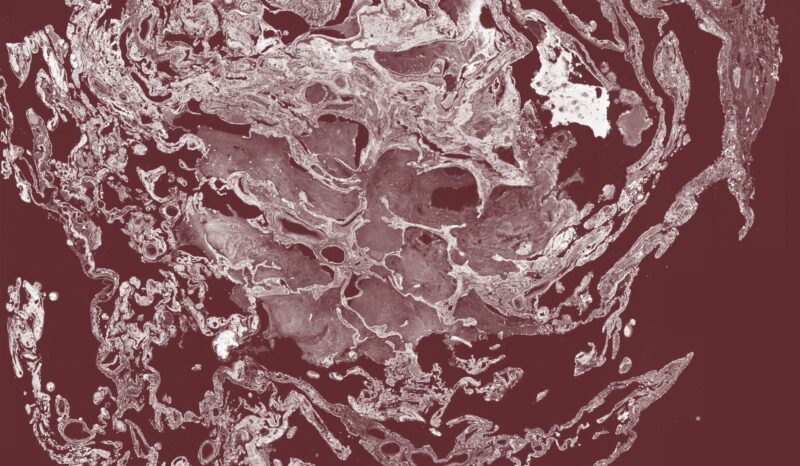
A visual showing layers within a retina, captured under a microscope
An image of the outer retina showing reticular pseudodrusen sitting above the retinal pigment epithelium. Image: Prof Erica Fletcher, University of Melbourne.

The Australian team led a large international study which, for the first time, pinpointed a key difference in genetic changes in the group with reticular pseudodrusen – finding a strong link with genetic variations on Chromosome 10 but no link to other well-known AMD genes changes on Chromosome 1.

Eye scans of people with this genetic variation also revealed a thinner retina, a finding that warrants further investigation.

Study co-lead Professor Robyn Guymer AM, from the Centre for Eye Research Australia, said the results highlight that AMD is not a single disease but a group of related conditions potentially requiring tailored treatment approaches.

“Reticular pseudodrusen deposits, visible in eye scans, have been linked to worse visual function and poorer treatment outcomes,’’ said Prof Guymer.

“Our research has now identified which of the genetic changes appear to be driving this more serious form of AMD. This discovery provides a crucial lead for developing new drugs that target these changes – potentially preventing vision loss before it begins.”

Co-lead Professor Melanie Bahlo AM from WEHI said this was the first genome-wide analysis of the genetic drivers behind reticular pseudodrusen.

“In 2005, researchers first linked changes on Chromosome 1 including the complement factor H (CFH) gene, part of the immune system, to AMD,’’ said Prof Bahlo.

“Recently, new treatments targeting these changes have shown modest success in slowing down the disease.

“Our study is the first to suggest that reticular pseudodrusen deposits are driven by pathways associated with Chromosome 10 but not by the well-known AMD-related genes on Chromosome 1.

“This is a significant finding. It demonstrates the need to explore how genetic changes on Chromosome 10 affect retinal structure and to develop therapies that go beyond complement factor to targeting to prevent sight-threatening deposits on the retina.”

The research was funded by a National Health and Medical Research Council Synergy Grant.

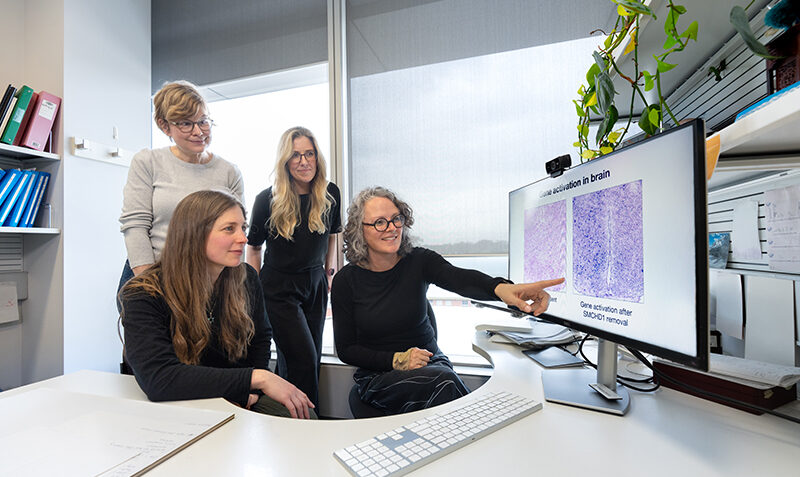
Header image: The research team who led the discovery (L–R): Associate Professor Zhichao Wu (CERA), Professor Alice Pebay (University of Melbourne), Professor Robyn Guymer (CERA), Professor Erica Fletcher (University of Melbourne), Professor Melanie Bahlo (WEHI), Dr Brendan Ansell (WEHI) and Dr Carla Abbott (CERA).

Related topics
Key Researchers
Laboratory Head
Media Enquiries
Reference
HTRA1/lncRNA HTRA1-AS1 dominates in age-related macular degeneration reticular pseudodrusen genetic risk with no complement involvement
Journal
Nature Communications
DOI
10.1038/s41467-025-65903-9
Full details
WEHI Authors
Laboratory Head
Senior Research Officer
Research Officer
Liam Scott
PhD Student
Support us

Together we can create a brighter future

Your support will help WEHI’s researchers make discoveries and find treatments to ensure healthier, longer lives for you and your loved ones.

Sign up to our quarterly newsletter Illuminate

Find out about recent discoveries, community supporters and more.

Illuminate Summer 2025
View the current issue