If you would like to give to a specific research program or support the work of a particular researcher, contact our fundraising team today.
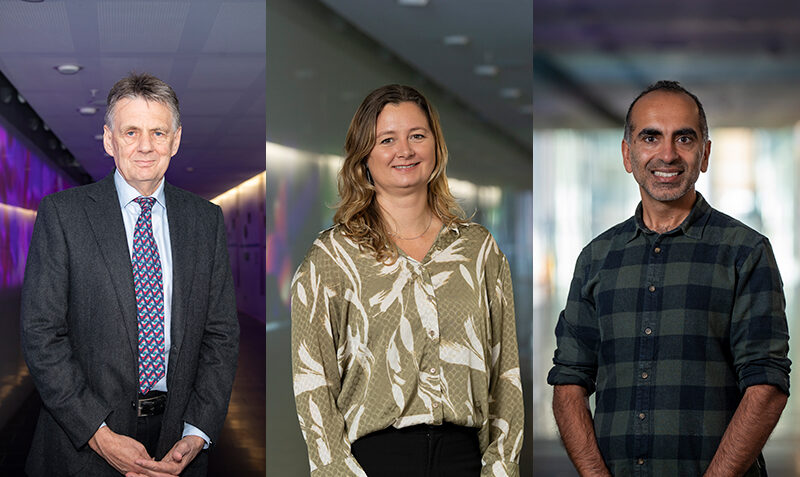
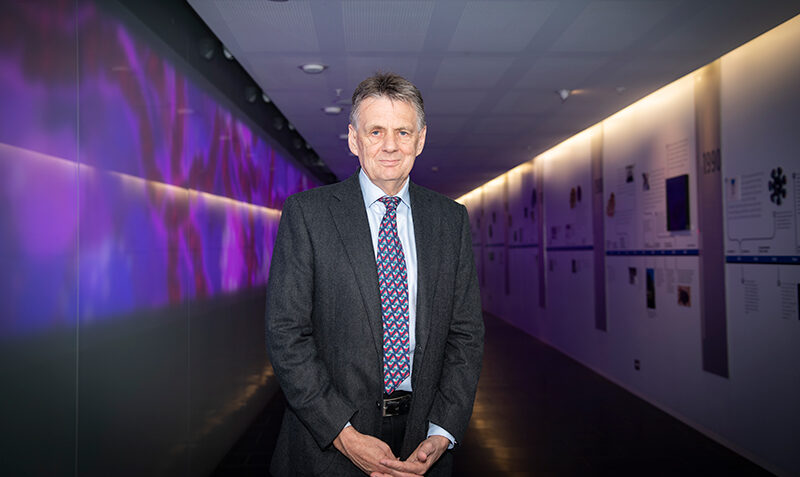
Professor Alan Cowman has been honoured with the Macfarlane Burnet Medal and Lecture – one of the most prestigious career awards of the AAS, recognising researchers of the highest standing for their contributions to science.
Malaria affects more than 282 million people worldwide and claims over 600,000 lives a year. Children under five are most at risk.
A WEHI laboratory head and former deputy director and acting director of the institute, Prof Cowman has spent his career uncovering how the parasite Plasmodium falciparum, responsible for the most severe cases of malaria, causes disease. This knowledge has transformed the global research landscape and opened new paths for treatment.
His pioneering discoveries have enabled the first genetic modification of P. falciparum, creating a fundamental tool now used worldwide to investigate parasite biology.
Prof Cowman has also revealed how the parasite invades and remodels human red blood cells, transforming our understanding of malaria infection.
Based on the genetic knowledge and technology developed in his lab, Prof Cowman has designed novel vaccine strategies, with his work also defining the molecular basis of resistance to several major antimalarial drugs, providing critical insights for global health.
Prof Cowman has led the team behind a new antimalarial drug candidate, co-developed through a longstanding collaboration with global biopharmaceutical company MSD (tradename of Merck & Co., Inc., Rahway, N.J., USA).
The first-in-class clinical candidate MK-7602, which has shown potent activity against the two most common malaria parasites affecting humans, has since completed Phase 1 safety and tolerability studies.
“I am deeply honoured to receive the Macfarlane Burnet Medal. It reflects not only fundamental discoveries about Plasmodium biology but also the determination of a superb team to translate those insights into therapies and vaccines that could save many lives,” said Prof Cowman.

Dr Belinda Phipson has been awarded the Christopher Heyde Medal, which recognises outstanding research in the mathematical sciences.
The WEHI laboratory head is an internationally recognised early career statistician working in bioinformatics and medical research.
As new technologies allow scientists to profile genomic information at the level of individual cells, her work provides the rigorous statistical foundations needed to turn these complex, large-scale datasets into reliable biological and medical discoveries.
Much of Dr Phipson’s research focuses on modelling variability in genomic data to distinguish real biological signals from technical noise.
She translates advanced statistical ideas into robust, user-friendly software now embedded in standard analysis pipelines used around the world, across technologies including RNA-sequencing, methylation arrays, and single-cell and spatial transcriptomics.
Among Dr Phipson’s most significant contributions is her work on robust empirical Bayes methods, part of the widely-used limma software framework. She has also pioneered several first-of-their-kind statistical tools that are now standard in genomics research globally.
Working closely with biomedical collaborators, Dr Phipson has applied these methods to make significant discoveries across cancer therapy, kidney development and disease, heart development and stem cell biology.
“My research strengthens the foundations of modern genomics and helps turn large-scale data into reliable biological and medical insights,” she said.
“I feel deeply honoured to receive this award. It will help amplify the impact of my research and raise the profile of bioinformatics more broadly – opening doors to new collaborations and giving our work greater visibility across both statistics and biology.”
Professor Sant-Rayn Pasricha has received the Gustav Nossal Medal, which recognises research of the highest standing in the field of global health.
Prof Pasricha, a laboratory head at WEHI and Head of the Melbourne School of Population and Global Health at the University of Melbourne, has made transformative discoveries and directly translated knowledge into policy at the highest international level.
An estimated 1.7 billion people worldwide are affected by anaemia, including around half of all children in Asia and Africa. To combat this, Prof Pasricha has pioneered programs that aim to reduce the burden of anaemia in children in rural Bangladesh.
His team has led three large trials in Malawi and Bangladesh that seek to discover new solutions for anaemia in pregnancy. One of these confirmed that intravenous iron was superior to iron tablets (the current standard-of-care) in improving anaemia in women in the third trimester of pregnancy.
Prof Pasricha has also played a pivotal role in strengthening global diagnostic standards.
Invited to provide the evidence to support revised WHO guidelines for haemoglobin thresholds to define anaemia – which had not been updated in 50 years – his work directly informed the 2024 global guideline, which now shapes how anaemia is diagnosed in every country worldwide.
“This recognition speaks to the hard work and dedication of my team at WEHI and the University of Melbourne, and our network of partners across Malawi and Bangladesh, who have all worked so tirelessly as a team to bring our projects to fruition,” said Prof Pasricha.