
Cells and the Suburbs
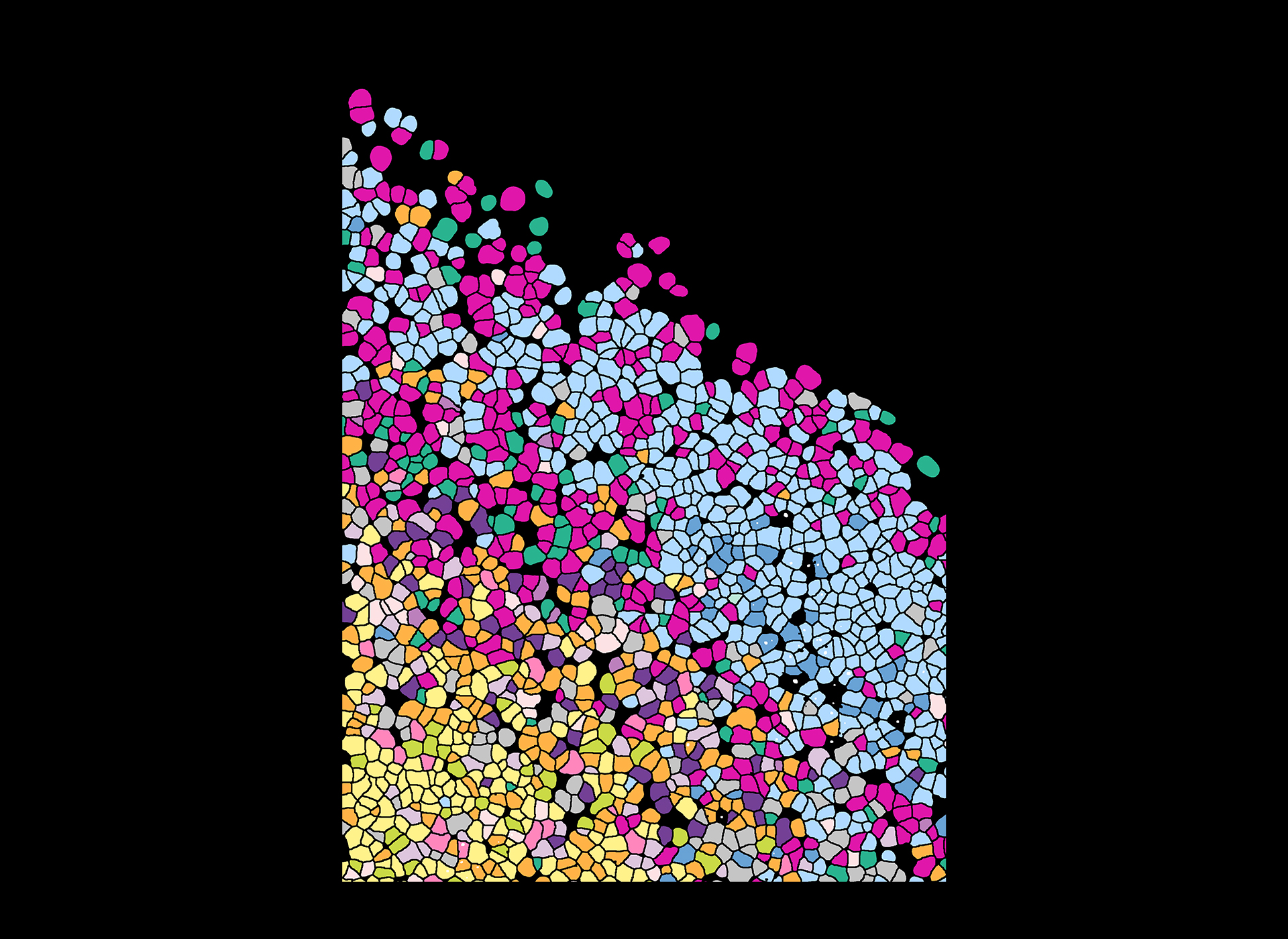
This colour-segmented map of a mouse lymph node was created using spatial transcriptomics, a technique that reveals the genetic identity and location of individual cells within tissue. Colours represent different types of immune cell, highlighting how these cells organise into distinct ‘suburbs’ inside the lymph node.
Brigette and Chin Wee’s research focuses on memory T cells, shown in purple, which remain in the body after infection and provide long-term disease protection. They discovered that these cells settle in specialised regions alongside specific dendritic cells (pink and teal) which help coordinate immune responses, outside the lymph node’s main T cell zone.
Understanding how memory T cells position within tissues could help scientists design vaccines that generate stronger and longer-lasting immune protection against infectious diseases and cancer.
- Brigette Duckworth
- Chin Wee Tan