Climate change is one of the defining challenges of the twenty-first century, with rising temperatures threatening human health worldwide.
The immune system sits at the interface between the environment and disease, yet the effects of climate-related stressors on immune function remain poorly understood.
Our team has established one of the first rigorously controlled murine heat-stress models, providing a unique platform to investigate how environmental change reshapes immunity.
We aim to uncover how climate stressors leave lasting cellular and molecular imprints that influence susceptibility to cancer, autoimmune diseases, and infectious diseases.
By combining immunology, systems biology, and single-cell technologies, we seek to define the mechanisms linking environmental stress to immune dysfunction and establish a new framework for understanding immune vulnerability in a warming world.
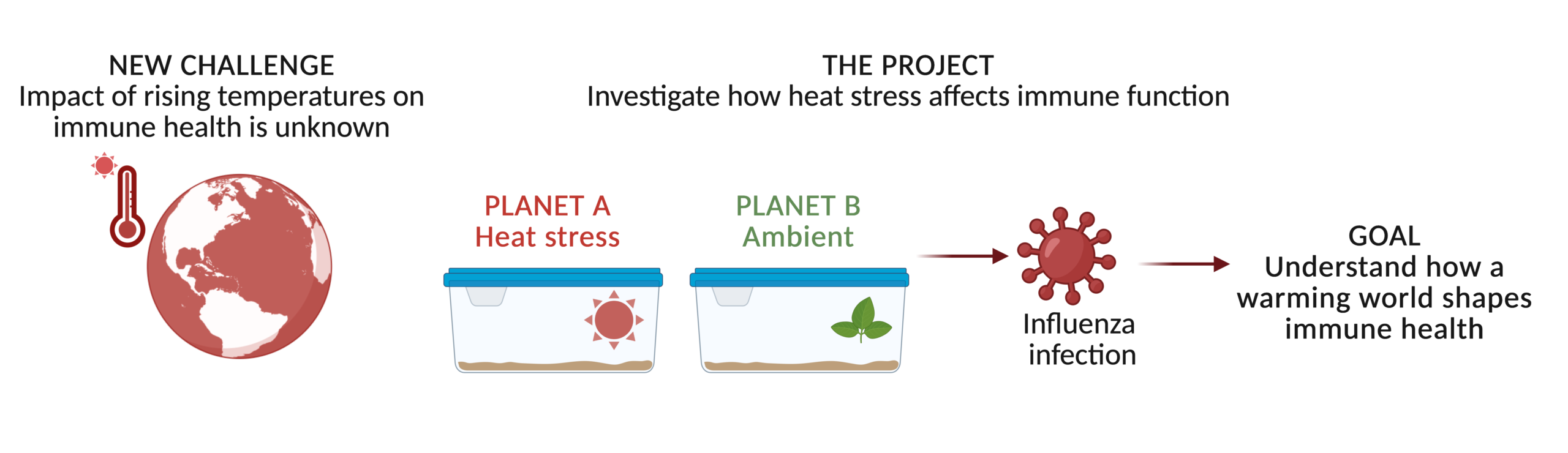
This project combines a robust heat-stress model, controlled heat-exposure systems, and innovative technologies to define how climate stress reshapes immune cell biology and drives new discoveries in climate immunology. Illustrations created with BioRender.com.