

-

New enzyme atlas rewrites decades of biology research

23 March 2026

WEHI researchers have led a major global effort to create the first authoritative atlas for a class of enzymes that regulate almost every cellular process in the human body.

Published in Cell, the breakthrough study establishes the first gold-standard reference for all human E3 ligases, resolving nearly two decades of inconsistencies within the field.

The atlas will enable researchers to study E3 ligases in unprecedented detail, paving the way for the development of enhanced therapies for diseases linked to these enzymes, including cancer, immune disorders and neurological conditions.

WEHI leads unprecedented global study to establish the first unified and expert-curated atlas for one of life’s most important enzyme families: E3 ligases.
The new compendium, made publicly available online, standardises more than 18 years of fragmented and often conflicting annotations into a single gold-standard reference.
The findings provide a powerful foundation for developing new and precise medicines for diseases including cancer, immune disorders and neurological conditions.

A long-standing gap in biological discoveries

E3 ligases are enzymes that control the fate and function of proteins in virtually every cellular process.

These enzymes act as cellular ‘gatekeepers’, deciding which proteins should be activated, silenced and destroyed.

They do this by attaching a small molecule called ubiquitin onto proteins to ‘tag’ them, helping the cell control what proteins do and whether they are repaired, relocated, or destroyed.

Errors in these control systems can sometimes lead to an accumulation of old or damaged proteins, which can trigger a broad range of diseases.

Despite decades of being linked to human health, there are disparities about how the scientific community defines E3 ligases – making it challenging to build a coherent understanding of how these enzymes function in health and disease.

The new atlas, known as the human E3ome, is a landmark unified classification framework that changes this.

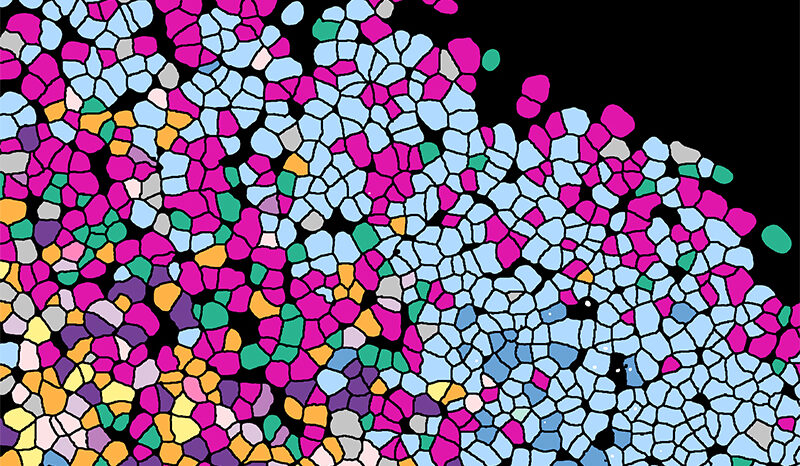
Pictured: The organisation and distribution of the landmark E3-ome atlas. The new compendium has resolved more than 18 years of inconsistencies within the scientific community.

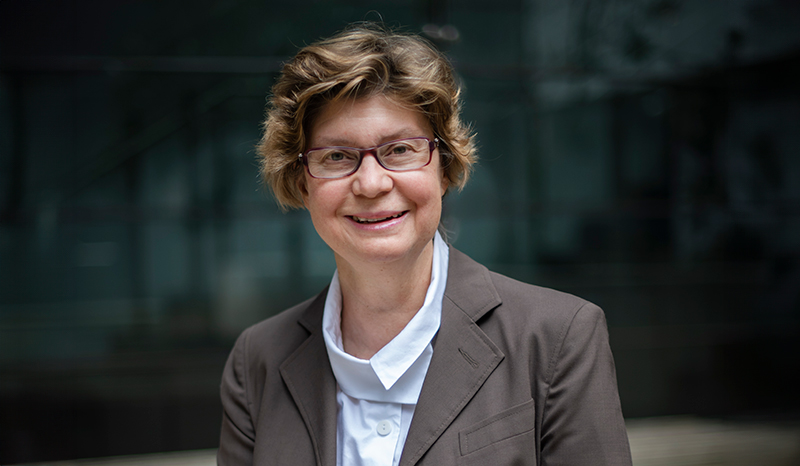
Corresponding author and WEHI Laboratory Head Dr Rebecca Feltham said the atlas marks the first time experts in the field have collectively agreed on what the human E3 ligase family looks like since their discovery in the 1980s.

“This is a major advance in a field where information has been spread across many different studies making it difficult to see the full picture,” Dr Feltham, said.

“The lack of a unified E3 ligase compendium has been one of the most persistent blind spots in human biology.”

“We now have a gold-standard reference for the field that will enable discoveries for a wide spectrum of diseases that simply weren’t possible before.”

In the four-year study, WEHI researchers along with worldwide specialists collated more than 1100 historically proposed E3 genes, reviewing domain structural features, protein domains and interaction data to evaluate the evidence supporting each candidate.

Of these, 672 met the highest confidence criteria.

Previous estimates about the number of existing E3 ligases widely varied – with published research ranging from approximately 300 to over 1000.

“When researchers analyse E3 ligases now, their findings will be more accurate and comparable because of the E3-ome,” Dr Feltham said.

“This will open the field wide open in terms of what research questions can be explored and transform our understanding of this field for years to come.”

The study builds on foundational research conducted in 2008 by researchers at The Scripps Research Institute, who became the first to develop the human E3 ligase annotation.

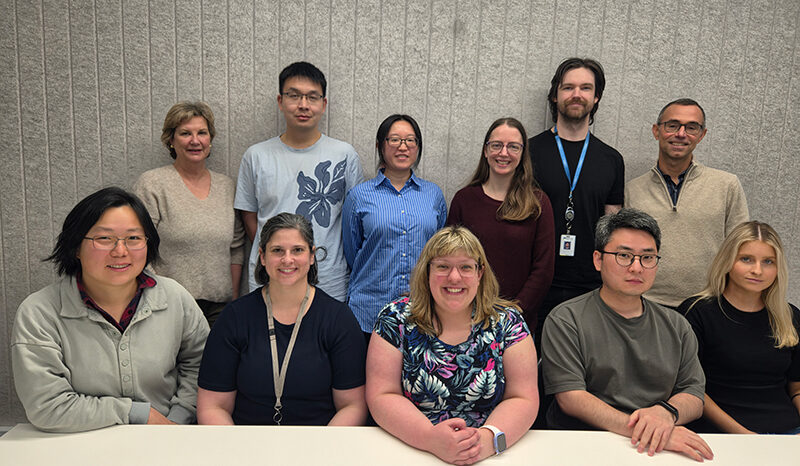
Dr Ngee Kiat (Jake) Chua and Dr Rebecca Feltham spearheaded the global study that involved more than 40 experts.

Powering future discoveries

Technologies like PROTACs, molecular glues and emerging E3 inhibitors rely on hijacking or modulating E3 ligase activity to eliminate harmful proteins.

First author and WEHI postdoctoral researcher, Dr Ngee Kiat (Jake) Chua, says the E3-ome provides a critical framework for new drug targets and therapeutic strategies, while also highlighting previously overlooked E3 ligases that may hold untapped therapeutic potential.

“E3 ligases are at the centre of a rapidly expanding therapeutic frontier, becoming central to how we design medicines,” Dr Chua said.

“Our study systematically analysed genetic and disease association data across the E3 ligase family, providing a clearer view of E3 ligases across select disease contexts.

“We also mapped where E3 ligases reside inside cells and across the human body, making it easier for researchers to understand how these regulatory systems fail in disease and how they can be corrected.

“The unprecedented insight provided by the E3-ome will support the development of more precise medicines to target disease mechanisms directly.”

A global collaboration pioneers the compendium

The study represents one of the largest of its kind in the ubiquitin field between multiple institutions across Australia, New Zealand, Canada, Germany, Switzerland, the UK and USA.

More than 40 scientists in ubiquitin biology, structural biology, genetics, computational analysis and E3 ligases banded together for the study.

The human E3-ome was made possible by recent advances in scientific technologies, including artificial intelligence-driven analysis and large-scale human population genetics datasets, which allowed researchers to evaluate E3 ligases with unprecedented depth and accuracy.

Pictured: A new family member (RNF228) identified in the human E3-ome atlas. RNF228 (blue) is in contact with an E2 enzyme (red) and ubiquitin (yellow).

While the E3-ome is a pioneering resource, researchers emphasise the 672 enzymes currently defined is not a static number.

This figure is expected to grow as new structural, biochemical and genetic data become available.

To support ongoing discovery, researchers have made the complete E3 ligase compendium publicly available, enabling other researchers to build on the classification and functional insights.

The continuously updated version of the E3-ome is available online at: [https://github.com/FelthamLaboratory/E3-ome].

This research is supported by the Galbraith Family Charitable Trust, the National Health and Medical Research Council, Wellcome, The Marian and E.H. Flack Fellowship, and the Australian Government.

WEHI authors: Ngee Kiat Chua, Richard Birkinshaw, Ashleigh Solano, Jacob Munro, Julie Iskander, Waruni Abeysekera, Matthew Ritchie, Melanie Bahlo, David Komander, Bernhard Lechtenberg, Jeff Babon and Rebecca Feltham.

Participating institutes:

Australia: WEHI; University of Melbourne; University of Adelaide; Flinders University; University of South Australia; University of Queensland and University of Sydney.

USA: NYU Grossman School of Medicine; Memorial Sloan Kettering Cancer Center; DanaFarber Cancer Institute; Harvard Medical School; University of California, Berkeley; University of Washington; The Herbert Wertheim UF Scripps Institute for Biomedical Innovation & Technology; UT Southwestern.

UK: The Francis Crick Institute; University of Dundee; University of Oxford.

Germany: Max Planck Institute for Multidisciplinary Sciences; University of Bonn; Max Planck Institute of Biochemistry; Heidelberg University; University of Cologne.

Canada: Princess Margaret Cancer Centre; University of Toronto.

Switzerland: ISREC, EPFL.

New Zealand: University of Otago. (Includes industry affiliations: Lyterian Therapeutics; The Column Group.)

Related topics
Key Researchers
Laboratory Head
Senior Research Officer
Media Enquiries
References
The E3-ome gene-centric compendium reveals the human E3 ligase landscape
Journal
Cell
DOI
10.1016/j.cell.2026.01.029
Full details
WEHI Authors
Laboratory Head
Senior Research Officer
Richard Birkinshaw
Richard Birkinshaw
Ashleigh Solano
Research Officer
PhD Student
Dr Julie Iskander
Head, Research Computing Platform
Dr Waruni Abeysekera
Senior Research Officer
Laboratory Head
Laboratory Head
Support us

Together we can create a brighter future

Your support will help WEHI’s researchers make discoveries and find treatments to ensure healthier, longer lives for you and your loved ones.

Sign up to our quarterly newsletter Illuminate

Find out about recent discoveries, community supporters and more.

Illuminate Summer 2025
View the current issue