

-

From the Amazon to Parkville: the global trail to end malaria    

24 March 2026

From the depths of the Amazon rainforest to WEHI labs in Parkville, blood samples embark on a delicate, global journey – preserved by ice and a finely tuned logistical operation.

The careful, precise, temperature-controlled voyage of malaria-infected blood around the globe underpins the world-class research into this disease that puts half the world’s population at risk every day.

Blood must travel physically, meticulously protected, through multiple borders – and often on to other partners in Paris, London, Madagascar and Cambodia.

These precious vials are central to WEHI’s efforts to outsmart malaria and develop new diagnostics and treatments – all part of the long game to eliminate one of the most severe public health issues worldwide.

Behind every breakthrough in malaria research lies an intricate web of vital logistics, international teamwork and a tireless effort that spans years.

April 2021: Manaus, Brazil

WEHI begins a partnership with local healthcare teams in Manaus – an isolated city embedded in the Amazon rainforest, mainly accessible by riverboat or air.

Blood samples are collected from people infected with Plasmodium vivax (P. vivax). This strain of malaria can relapse due to dormant liver stages, making elimination difficult.

Samples are crucial for developing future diagnostic tests that can detect hidden liver-stage infections.

Brazil’s Amazon region is endemic for P. vivax. About 90% of all malaria cases in the Western Hemisphere are concentrated in the Amazon Basin.

“Ultimately the collaboration will help our people, but it also builds local capacity and contributes to malaria elimination efforts worldwide.”

– Dr Marcus Lacerda (pictured), researcher at the Tropical Medicine Foundation Doctor Heitor Vieira Dourado

August 2023: Manaus, Brazil

Field teams travel to remote villages to collect blood samples, often by boat navigating seasonal flooding and humidity.

Participants in floating villages are visited monthly to capture P. vivax in its various active and incubation stages.

Despite being a city, Manaus is surrounded by high-risk malaria zones. Samples are processed locally in Manaus labs using centrifuges and −80°C freezers.

June 2025: Transpacific transport

The cold, careful journey to Australia is one of chilled precision.

Blood samples are flown by plane through complex international routes.

The scale of the operation is extraordinary, involving:

22,600 frozen vials of plasma and whole blood,

280 freezer boxes packed into eight large thermal containers (each weighing 50kg),

20kg pellets of dry ice per box, with 3kg vapourising each day en route.

Dry ice top-ups at ports like Dubai maintain −50°C temperatures in transit.

Temperature loggers in every box track fluctuations to ensure sample integrity.

The process requires complex customs clearance with strict biohazard protocols and triple-layer packaging.

“Every vial represents a colossal effort – navigating time zones, languages, regulations and complex protocols – to bring these precious samples safely to our scientists.”

– Art Rowlands (pictured), logistics lead, WEHI

June 2025: WEHI labs, Parkville, Australia

WEHI is developing rapid diagnostic tests to detect P. vivax infections.

Similar to COVID rapid antigen tests (RATs, but using a drop of blood), these aim to identify people likely to relapse, enabling targeted treatment.

Supercomputers and algorithms (appropriately called Random Forest) are used to analyse samples and train diagnostic models.

WEHI also receives malaria blood samples from Ethiopia, Pakistan and Papua New Guinea.

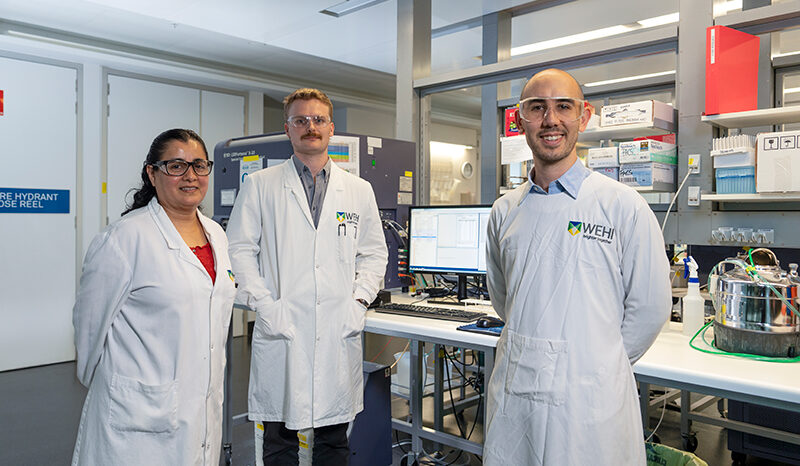
“We wouldn’t be able to do this important work without valuable collaborations because we just don’t have access to malaria blood in Australia.”

– Dr Ramin Mazhari (pictured), senior research officer and infectious disease specialist, WEHI

2025 and beyond: Global impact

After arriving in Parkville, blood is processed, tested and pooled into a biobank of plasma samples.

Samples are then shared with international collaborators from France to Laos, Ethiopia to Madagascar, to support malaria research and diagnostics worldwide.

Universal diagnostic tools are being developed using the samples as positive controls.

A global biobank is also being established to support malaria elimination goals in countries around the world, sharing pooled, tested samples with up to 30 labs across Southeast Asia, South America, Africa and Europe.

This effort has the potential to transform global malaria strategies – unlocking huge global livelihood, health and economic potential.

Your donation helps power the real work behind discoveries that change lives.
Related topics
Media Enquiries
Support us

Together we can create a brighter future

Your support will help WEHI’s researchers make discoveries and find treatments to ensure healthier, longer lives for you and your loved ones.

Sign up to our quarterly newsletter Illuminate

Find out about recent discoveries, community supporters and more.

Illuminate Summer 2025
View the current issue