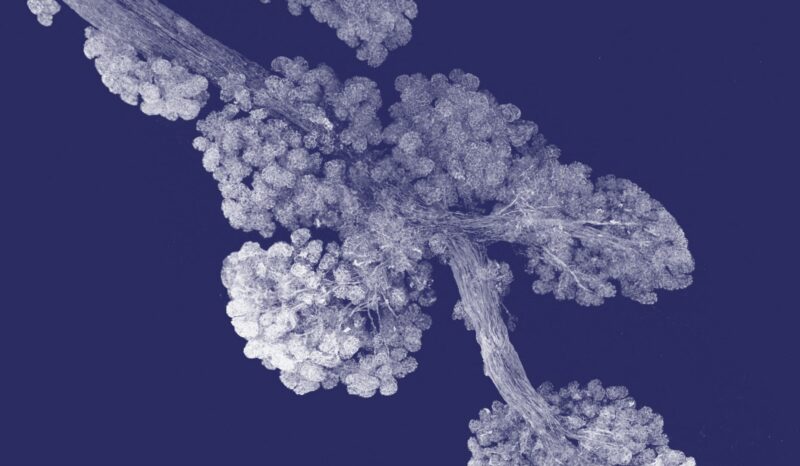
The extracellular matrix (ECM) is an important regulator of cell behaviour in all organs and is emerging as a major modulator of tumour progression and treatment response in many cancer types. Technical challenges in profiling the extracellular matrix have hindered our understanding of this critical component of the tumour microenvironment. The revolution in big data technologies, coupled with ECM-targeted method development, is now providing unprecedented opportunities to characterise ECM remodelling in health, and understand the functional role of key players in disease progression. This is revealing novel therapeutic opportunities to co-target this remodelling and improve treatment efficacy in aggressive cancer types. Through interrogation of bulk and spatial transcriptomics and proteomics data, we are beginning to define ECM remodelling processes that modulate the tumour ecosystem to shape disease trajectory. Furthermore, spatial profiling is shedding light on cancerization fields that extend beyond tumour margins to prime tissue for metastatic dissemination. These processes contribute to cancer risk and affect therapy response to impact patient outcomes, with potential utility as biomarkers of risk, prognosis and treatment response. Efforts to understand the ECM have highlighted key analytical considerations when working with matrisomal data compared with traditional proteomics. Conversely, analytical challenges remain in the identification and annotation of matrisomal data, particularly in the spatial domain. This seminar will outline the lessons we have learned, and approaches we are taking, to delve deeper into the matrix and unravel its major role in cancer biology.
Amelia completed her Bachelor of Biomedical Engineering and Advanced Science (Biochemistry) degree at the University of Sydney before undertaking her PhD (Children’s Cancer Institute and University of New South Wales) investigating the role of microtubule proteins in lung cancer aggressiveness and chemotherapy resistance. Amelia furthered her interest in translational lung cancer research during her postdoctoral training at the Laboratory of Human Carcinogenesis, National Cancer Institute, USA under the mentorship of Dr Curtis Harris, focussing on mass spectrometry-based biomarkers of cancer risk and prognosis, and their intersection with tumourigenic mechanisms. Currently at the Garvan Institute of Medical Research in Sydney, Amelia is a CINSW Fellow leading the interdisciplinary lung cancer program within the Matrix and Metastasis Lab led by Prof Thomas Cox. Here she is developing approaches to characterise and understand the role of extracellular matrix remodelling in cancer development and aggressiveness with a particular focus in lung cancer. This work is revealing novel stromal-targeting strategies that enhance treatment efficacy to contribute to a precision medicine framework in this aggressive cancer.