

-

National Reconciliation Week 2026 at WEHI 

04 June 2026

WEHI has marked National Reconciliation Week 2026 with a special seminar exploring First Nations health equity, leadership and the ongoing importance of reconciliation in health and medical research.

Held under this year’s National Reconciliation Week theme, All In, the event brought together researchers, staff, students and guests to reflect on the roles we can each play in advancing reconciliation through our everyday actions and work.

The seminar opened with an introduction and Acknowledgement of Country by WEHI director Professor Ken Smith who reflected on WEHI’s longstanding commitment to reconciliation, including efforts by former director Sir Gus Nossal AC. Professor Smith highlighted the importance of exploring opportunities for partnerships where WEHI research can contribute to First Nations-led research such as that of our guest speaker, Professor Catherine Chamberlain.

Professor Catherine Chamberlain and WEHI Director Professor Ken Smith with Reggie LoxCode, a work commissioned by WEHI and created by proud Ngarrindjeri weaver Emma Stenhouse, symbolising connection across time, place and community through traditional weaving practices and patterns inspired by the LoxCode lineage-tracing mouse.

Advancing First Nations health equity through research

The seminar’s keynote speaker was Professor Catherine Chamberlain, Head of the Indigenous Health Equity Unit at the Melbourne School of Population and Global Health, University of Melbourne.

Professor Chamberlain is a Trawlwoolway woman from Tasmania, a Registered Midwife and public health researcher whose work focuses on improving health equity across the lifecourse, particularly during pregnancy and early childhood.

As Head of the Indigenous Health Equity Unit, inaugural Editor-in-Chief of the First Nations Health and Wellbeing Lowitja Journal, and inaugural Chief Midwifery Officer for the College of Aboriginal and Torres Strait Islander Nursing and Midwifery, Professor Chamberlain has played a leading role in advancing Indigenous health research and practice nationally.

Her seminar explored the impacts of intergenerational trauma and the opportunities for healing through culturally informed approaches to health and wellbeing. Highlighting the unique life-course opportunity for transforming cycles of trauma to cycles of recovery.

Professor Chamberlain drew on major research initiatives including Healing the Past by Nurturing the Future, Replanting the Birthing Trees and Relighting the Firesticks and further engaged the audience with the question ‘how can we reverse epigenetic effects?’.

Attendees also heard from WEHI Laboratory Head Professor Shalin Naik, who shared a collaborative project that brought together science and First Nations artistic practice through the interpretation of scientific patterns using local materials and traditional weaving techniques created by proud Ngarrindjeri weaver Emma Stenhouse.

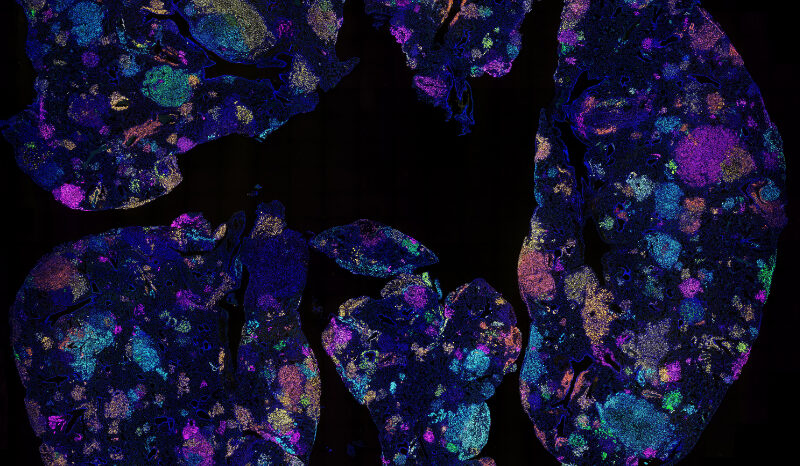
This woven piece symbolises connection across time, space and community. Its circular patterns are inspired by the LoxCode lineage-tracing mouse, created by Dr Tom Weber, Professor Naik and colleagues, which uncovered how early embryonic cells grow, branch, and link tissues and organs through development.

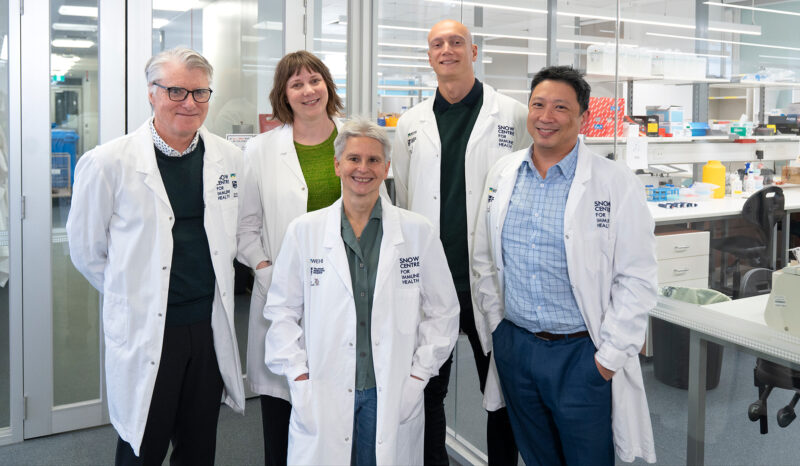
Staff and students attending this year’s National Reconciliation Week seminar.

WEHI’s commitment to reconciliation

WEHI recognises that reconciliation must be grounded in genuine partnership– partnerships that are respectful, reciprocal, and shaped by the priorities and leadership of First Nations peoples. We are committed to this journey not only through our research, but through how we work – alongside communities, researchers and partners. Our focus includes:

  • Developing WEHI strategy to advance First Nations research leadership, wellbeing and knowledge and forming a Strategic Action Team to promote and drive First Nations-focused and -led health research in the Parkville Precinct
  • Nurturing the ecosystem of First Nations researchers through our partnerships with DeadlyScience Pathways Program, CareerTrackers and our Indigenous Visiting Research Fellowship program, which supports First Nations researchers and strengthens Indigenous research leadership
  • Our First Nations Staff and Student Network, which provides peer support, connection and advocacy across the institute
  • Working across the precinct to extend support for First Nations students into their chosen fields, and creating clearer, supported pathways into WEHI.
  • Developing our cultural capability to align with the principles of the marra ngarrgoo, marra goorri Victorian Aboriginal Health, Medical and Wellbeing Research Accord developed and overseen by the Victorian Aboriginal Community Controlled Health Organisation (VACCHO) including humility and understanding the ongoing impacts of colonisation on health, education and employment.

We acknowledge and pay respect to all Australian First Nations people, whose ancestors were Australia’s first scientists.

Header image: Professor Catherine Chamberlain

Your donation could help find that cure that saves someone – maybe someone you love.
Donate now
Related topics
Media Enquiries
Support us

Together we can create a brighter future

Your support will help WEHI’s researchers make discoveries and find treatments to ensure healthier, longer lives for you and your loved ones.

Sign up to our quarterly newsletter Illuminate

Find out about recent discoveries, community supporters and more.

Illuminate Autumn 2026
View the current issue