

Making cell therapies controllable
Cell and gene therapies often involve taking a patient’s immune cells, correcting or engineering them in the lab, and returning them to the body. But once those cells are back in the patient, clinicians have limited ways to selectively boost or suppress them.
This is particularly challenging for people who need ongoing immunosuppression, including some patients with rare immune disorders, transplants, severe infections or cancers linked to immune suppression.
The drugs needed to control disease or protect a transplanted organ can also suppress the therapeutic cells that the patient needs.
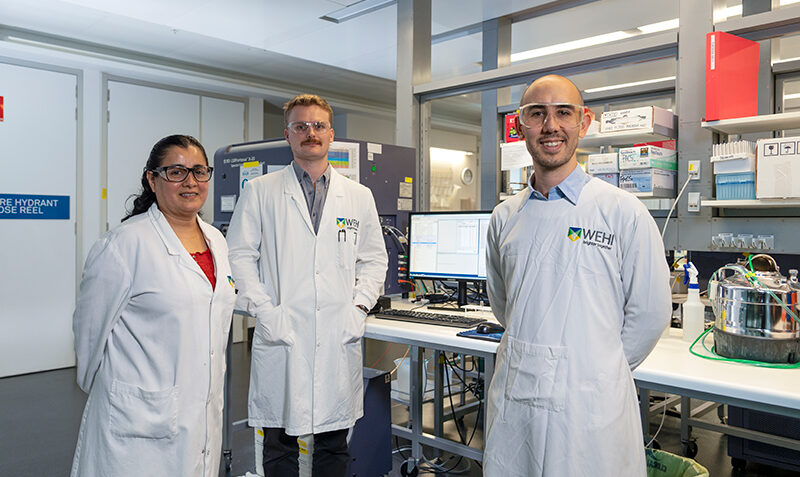
Co-senior author Dr Miles Horton said the team used prime editing, an emerging gene-editing technology that can make precise DNA changes, to address a practical problem seen in clinical care.
“We’ve used genetic engineering to rewire these cells so clinicians could use existing drugs, already sitting in the hospital pharmacy, as a control dial,” said Dr Horton, a WEHI researcher and paediatrics resident at the Royal Children’s Hospital.
“Some approaches being explored elsewhere would require doctors to adopt a new cell therapy and a new drug at the same time. Our aim was to build a platform around clinical reality, using medicines that clinicians already know and use.”
The team showed T cells could be made resistant to a commonly used immunosuppressive drug (tacrolimus), while remaining sensitive to a related alternative (cyclosporin).
This precise ‘control dial’ could allow clinicians to use one drug to help corrected cells survive while other immune cells are suppressed, while preserving another drug option if the edited cells behaved unexpectedly and needed to be wound back.