

-

How WEHI is redefining Parkinson’s disease research 

10 April 2026

On World Parkinson’s Day, we turn to the scientists reshaping what the future of this disease could look like.

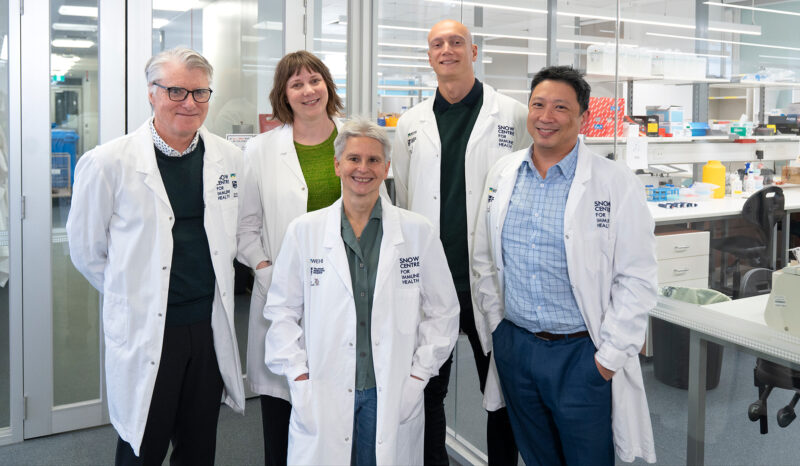
At WEHI, Professor Grant Dewson leads a centre that, in just a few years, has begun to challenge and rewrite the scientific story of Parkinson’s. For him, the mission is now deeply personal; after joining the search for answers, he learned that his own family had been touched by the disease.

Parkinson’s disease is driven by the untimely death of neurons, resulting in symptoms that affect movement, thinking, mood and speech. With no diagnostic test and no drug to stop its progress, the human toll is immense as 40 Australians receiving the diagnosis every single day.

At a glance
WEHI’s Parkinson’s Disease Research Centre was established in 2019 and in a few years has already delivered game-changing scientific breakthroughs.
Using a multidisciplinary, precision medicine approach, and collaborating with other research institutes and people with lived experience, the centre aims to turn discoveries into new drugs.
The centre is also a founding member of the National Parkinson’s Alliance and a partner in the NHMRC Centre of Research Excellence for Parkinson’s Disease: Advancing Precision Medicine.

Stopping the ‘killer’ protein

As well as being the Head of the Parkinson’s Disease Research Centre, Professor Grant Dewson runs a lab in the Ubiquitin Signalling Division studying how and why cells die.

Prof Dewson with WEHI division head, Professor Guillaume Lessene recently made an important discovery about a protein that is implicated in killing neurons. Working together they are now trying to develop a drug to block this killer protein, with the hopes that it will be helpful not only to people with Parkinson’s but potentially also to other neurodegenerative conditions.

Profiling Parkinson’s

Professor David Komander, Head of the Ubiquitin Signalling Division at WEHI and co-founder of the Parkinson’s Disease Research Centre, has received many accolades for his work on Parkin, PINK1 and USP30, which are known drug targets in Parkinson’s disease.

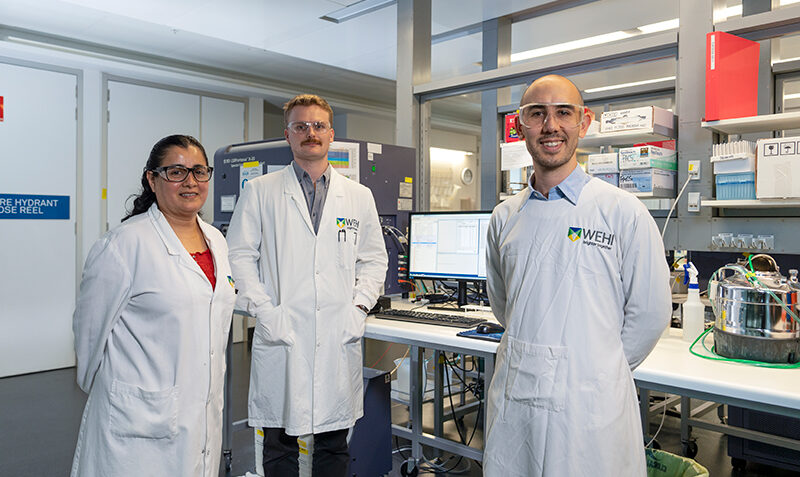
He is now using pioneering mass spectrometry techniques to create a complete map of the underlying disease mechanisms in Parkinson’s and believes this will have a two-fold impact of discovering a biomarker to monitor disease progression as well as helping to prevent the failure rate of clinical trials.

Thinking PINK1

Last year, Dr Sylvie Callegari was part of the team that won the 2025 UNSW Eureka Prize for Scientific Research for their discoveries around visualising PINK1 for the first time, a protein that has been linked to Parkinson’s since it was first discovered.

This year, with a promotion to heading up her own research lab, her focus turns towards translating the discoveries into a drug that can be taken to clinical trials. The aim is to boost the energy-producing factories of cells called mitochondria, which become damaged in Parkinson’s.

Biomarker boost

Not all science involves cells and microscopes. Professor Melanie Bahlo’s lab uses genomics data to model and understand Parkinson’s using cutting-edge computational analytics.

As part of an international working group, Prof Bahlo’s team is searching for a blood-based biomarker. Using their world-leading bioinformatics capabilities, they hope to help pave the way towards a blood test to diagnose the disease, allowing earlier treatments so people with Parkinson’s can have a better quality of life for longer.

Targeting neuroinflammation

Inflammation is increasingly recognised as a contributor to Parkinson’s disease. Dr Bekky Feltham’s lab studies how inflammation is controlled at the molecular level, focusing on enzymes called ubiquitin ligases.

These enzymes act like matchmakers, bringing disease-related proteins to the machinery that removes them. When that system fails, inflammation can spiral out of control. By understanding these processes, her team aims to uncover new ways to better control inflammation in diseases like Parkinson’s, with the goal of developing targeted new drugs to block it.

The effects of advocacy and philanthropy

Shifting focus from pure science, the centre embeds consumers with lived experience of Parkinson’s into its labs, providing researchers with invaluable insight into how the disease impacts lives. Last year, the team published their first consumer-led research paper.

Prof Dewson said that one of the most overlooked impacts on medical research is the backing scientific teams receive from philanthropic donors, people who often have Parkinson’s themselves or have family members with Parkinson’s.

“It’s been crucial to our progress so far. We wouldn’t have been able to make the progress we have as quickly, without the financial support from our generous donors,” he said.

Your donation could help find the cure that saves someone – maybe someone you love.
Donate now
Related topics
Key Researchers
Laboratory Head
Photo of Professor David Komander
Division Head
Laboratory Head
Laboratory Head
Laboratory Head
Media Enquiries
Support us

Together we can create a brighter future

Your support will help WEHI’s researchers make discoveries and find treatments to ensure healthier, longer lives for you and your loved ones.

Sign up to our quarterly newsletter Illuminate

Find out about recent discoveries, community supporters and more.

Illuminate Autumn 2026
View the current issue