

-

A future powerhouse of Parkinson’s disease 

28 May 2026

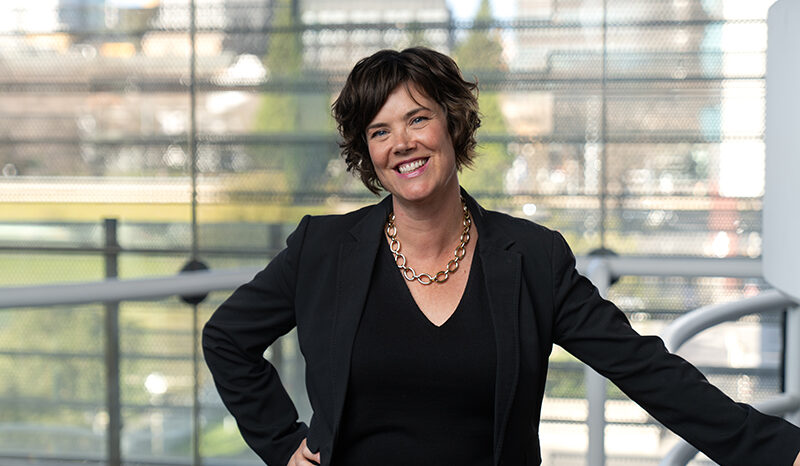
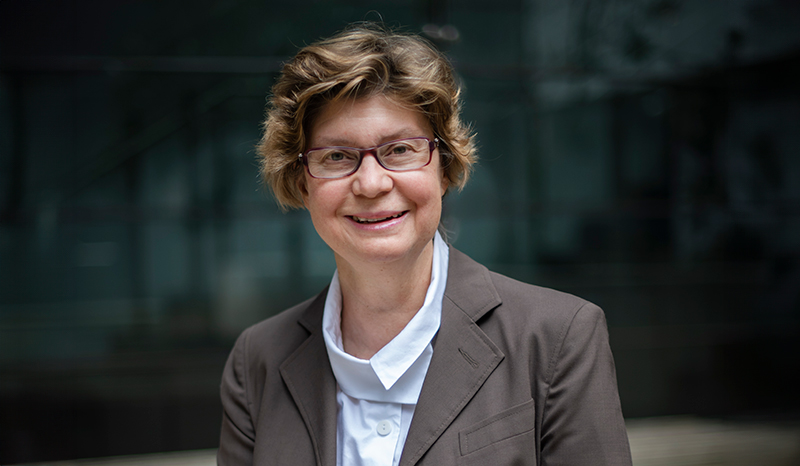
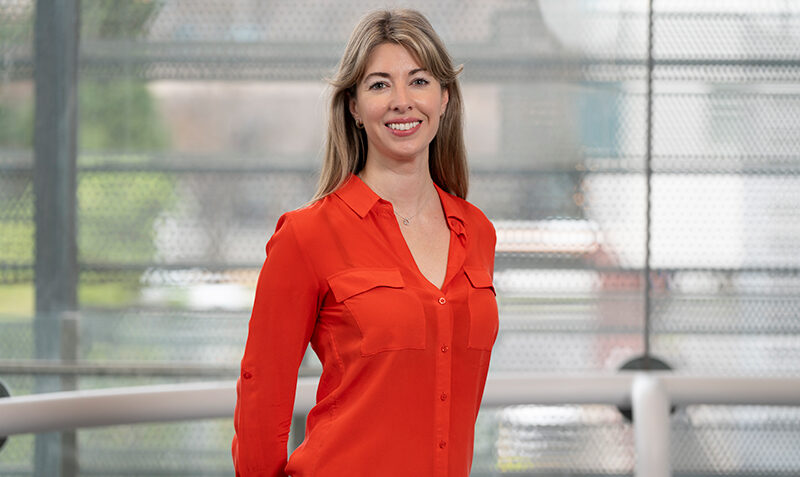
Dr Sylvie Callegari is a rising star in the study of mitochondria, often called cellular powerhouses. Following a recent promotion, she is also the newest lab head in the Parkinson’s Disease Research Centre.

She also recently won the Burnet Prize, alongside last year’s UNSW Eureka Prize for Scientific Research, for her research into PINK1, a protein that has been linked to Parkinson’s disease.

The Burnet Prize is WEHI’s most illustrious science award and is given to scientists at the institute who have produced pioneering research. In receiving the award, Dr Callegari joins a prestigious list of names that have gone on to be division heads or lead other institutes.

We sat down with Dr Callegari to find out what inspires her and she shared some fascinating insights into her research.

My research focuses on… mitochondria – how they are built and how they are maintained. Mitochondria are little power factories in all cells of all living things that produce energy. When they are not well maintained or recycled, they can become toxic to cells, leading to the death of brain cells and the onset of Parkinson’s disease symptoms.

If I had to explain what mitochondria are to a five-year-old I’d say… that they’re just like the batteries that you need for your toys to work, mitochondria are the batteries that keep you alive and give you the energy to run around!

If I had to redesign mitochondria from scratch I would… make them less fragile. Mitochondria are highly prone to damage which accumulates in their DNA. Unlike the DNA in our nucleus, mitochondrial DNA cannot repair itself as efficiently and so this damage accumulates and is a major diver, not only of disease, but also of ageing. So I’d give them a better DNA repair system and hopefully we can live healthier and longer.

One of the coolest things I’ve been able to do as a scientist is… that I’ve been invited to present my findings at conferences around the world. Getting to travel to places that I would otherwise not get to see is pretty cool.

When I’m not in the lab, I like to… go running and do pilates. When I was younger I did athletics for many years and was even a South Australian state champion for high jump (U20s). So I still like to keep active.

Dr Callegari at WEHI’s 2024 Run Walk event

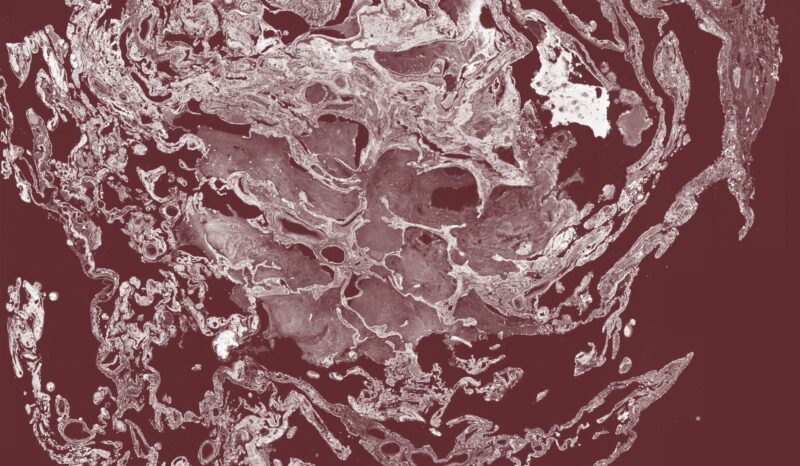
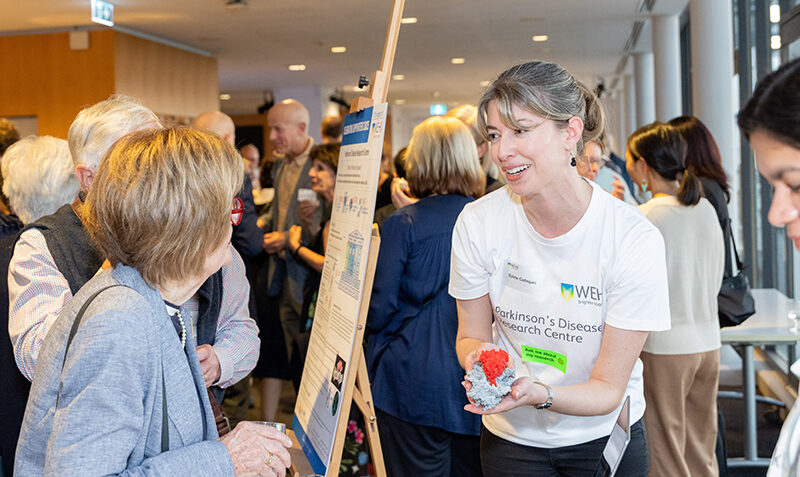
When I realised I’d seen PINK1 for the first time I felt… awe and disbelief. It was 9:15pm on a Sunday night, and I was trying to finish a presentation for the next day, when Nick (Kirk) sent me an email with the initial images of PINK1 on the surface of mitochondria. He had spent the weekend collecting images on the microscope and had enough to make a 3D reconstruction. The structure of PINK1 was visually stunning. It was unlike anything we had expected to see, or that I had ever seen before, so I knew it was a big deal. The next few weeks were the most exciting of my career as we figured out exactly what was in this structure, all while knowing we were the only ones in the world to have seen it at that point.

A surprising fact most people don’t know about mitochondria is… that all the mitochondria in our body produce about 1200 watt of energy each day. This is the equivalent of 300 AA batteries! And 70% of this is used by the brain.

Artificial Intelligence makes my research… more effective. AI has revolutionised how we approach research questions, particularly when it comes to predicting what proteins look like. For example, instead of asking what does one protein look like (which can now be predicted by AI), we can now ask what do molecular machines made up of many proteins look like in the cell. This is something that AI cannot predict very well but can guide our experimental approaches. AI is based on existing knowledge, while science is fundamentally about finding things we don’t know. So although AI is an amazing tool, I don’t see how it can ever replace a scientist.

Dr Callegari explaining her PINK1 discovery at a WEHI event

Technology has helped my work by… enabling us to have a microscope that is powerful enough to see small protein molecules in cells. The cryo-electron microscope that was used to visualise PINK1, took images at a magnification over 100,000X. This is the equivalent of standing on the moon and being able to see a human on earth.

One of the biggest challenges I’ve overcome was… moving countries twice (Adelaide to Germany, and then Germany to Melbourne). It takes time to adapt to a new place and form new social networks. I was homesick when I first moved to Germany, but unexpectedly I was also homesick for Germany when I returned to Australia.

The most inspiring person I’ve met at WEHI… is a group of people: our Parkinson’s consumers. It’s hard not to be inspired by someone who has been diagnosed with a life-changing illness, yet eagerly gives of their time, energy and life experience to help our research efforts. In this job it’s easy to get caught up chasing funding, publications and recognition, but our consumers remind me of the real purpose behind the work.

I hope my team’s research will make an impact by… defining what the molecular machines on the outer surface of the mitochondria look like. In doing so, we can better understand how these cellular powerhouses are controlled and how to hijack these control systems when mitochondria are not working properly in diseases such as Parkinson’s disease.

Your donation could help find that cure that saves someone – maybe someone you love.
Donate now
Related topics
Key Researchers
Laboratory Head
Media Enquiries
Support us

Together we can create a brighter future

Your support will help WEHI’s researchers make discoveries and find treatments to ensure healthier, longer lives for you and your loved ones.

Sign up to our quarterly newsletter Illuminate

Find out about recent discoveries, community supporters and more.

Illuminate Autumn 2026
View the current issue