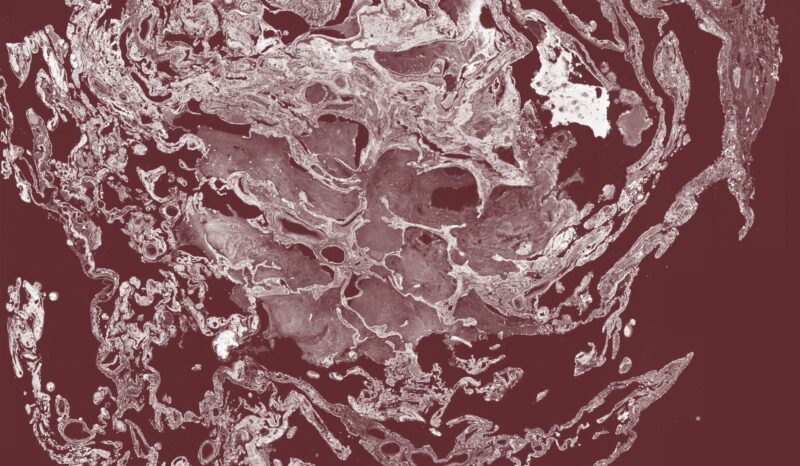
In this seminar, I will discuss how integrating high-resolution molecular and spatial profiling approaches can provide new insights into the cellular and organisational complexity of breast cancer. Breast cancer comprises a diverse group of histological and molecular entities, with most research focused on the common forms, while rare histological subtypes remain poorly characterised despite being aggressive tumours that are prone to metastasis and chemotherapy resistance and for which treatment options are limited. I will introduce our work investigating the cellular and spatial architecture of rare breast cancers using single-nucleus RNA sequencing and image-based spatial transcriptomics of archival FFPE tissues. This approach enabled the systematic characterisation of tumour cells, immune populations and stromal components while preserving their spatial relationships within the tumour ecosystem.
I will also highlight how these approaches reveal distinct, subtype-specific cellular ecosystems across rare breast cancers and how integrating molecular profiles with spatial information uncovers previously unrecognised tumour and microenvironmental features that help explain the distinctive biology of these cancers. Together, our findings reveal new avenues for understanding rare and clinically challenging breast cancers.
Somi Kordafshari is a postdoctoral researcher in the Breast Cancer Laboratory at WEHI. She completed her PhD at the University of Melbourne in microbial genetics, where she developed extensive expertise across a broad range of experimental and advanced molecular techniques.